

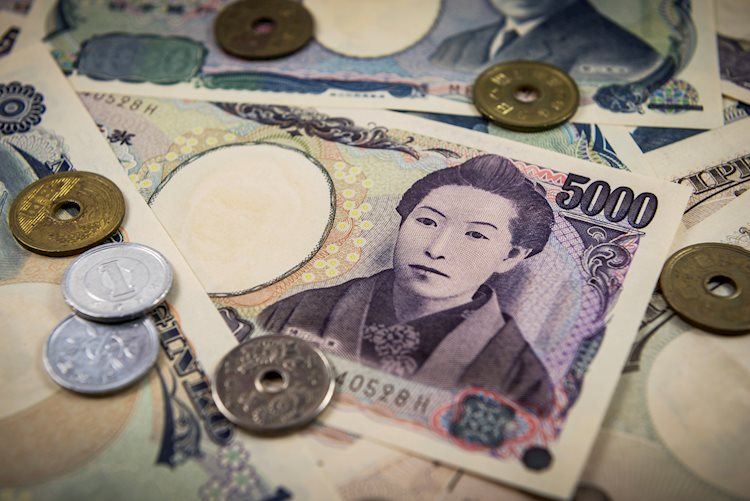
- The Japanese Yen slides lower against the Greenback, moving away from support levels.
- Fed Chairman Powell keeps his lips sealed on what the Fed will do next.
- The US Dollar Index holds in the 104.00 area and prints small gains on Tuesday.
The Japanese Yen (JPY) eases for a second day on Tuesday after the estimated 2.14 trillion Yen intervention from the Japanese Ministry of Finance last Thursday pushed the Yen from 162.00 to 157.00 against the US Dollar (USD) in just two days. However, the move is starting to fade and be pared back with the turn of events over the weekend, when former US President Donald Trump got shot during a political rally. The event panned out in favor of the former President, increasing his odds in the race towards the White House. Additionally, by picking Senator J.D. Vance as his running mate, Trump chose a firm believer in trade wars and protective policy to shield the domestic economy with even more tariffs than Trump issued back in 2018.
Meanwhile, the US Dollar Index (DXY) – which gauges the value of the US Dollar against a basket of six foreign currencies – is jumping higher for a second day in a row. Markets were a bit disappointed after Fed Chairman Jerome Powell refrained from commenting on any of the next or upcoming Financial Open Market Committee (FOMC) meetings. Traders would have loved to hear at least some clues about how the Chairman sees inflation pan out in the near future and what it would mean for rate cuts.
Daily digest market movers: rate hike odds fade for BoJ
- Reuters reports that Japan has spent nearly 2.14 trillion Yen on July 12th for its intervention, extracted from data coming from the Bank of Japan, Reuters reports.
- Bloomberg reports that several traders attribute the weaker Japanese Yen to market pricing in a potential Donald Trump win for the US presidential election.
- Mitsubishi UFJ Morgan Stanley Securities chief foreign-exchange strategist Daisaku Ueno issued a note that a “Trump trade” means a further strengthening of the US Dollar against the Yen (USD/JPY), with stocks and interest rates in the US set to outpace the Japanese ones.
- Japanese equities managed to eke out small gains on Tuesday and have closed off already with small gains locked in.
- The CME Fedwatch Tool shows an 89.4% chance of a 25 basis points (bps) interest rate cut by the Fed in September and 10.4% for a 50 bps cut. An unchanged scenario with no rate change is off the table.
- The Overnight indexed Swap curve for Japan shows a 43.7% chance of a rate hike on July 31 and a 35.9% chance for a hike on September 20.
- The US 10-year benchmark rate trades at the lower end of this week’s range near 4.17%.
- The benchmark 10-year Japan Treasury Note (JGB) trades around 1.02%, a fresh low for July.
USD/JPY Technical Analysis: copy and paste May’s outcome
Taking a step back at the recent turn of events since this weekend, it looks like markets have switched views and look to be okay for a Trump win in November. This means rather bad news for the Japanese Yen as pressure will now build towards the US Presidential November elections and will see a stronger US Dollar the more Trump leads in the polls. Seeing the support the Japanese Yen received at 157.60, a return to 160.32 looks to be the next step in the coming weeks.
On the downside, the 55-day Simple Moving Average (SMA) near 157.58is working as support and triggered a bounce on Thursday and Friday last week. On the upside, 160.32 is the first pivotal significant level to look out for, where either a rejection could occur to push the JPY back to 157.58, or might break with another rally taking place towards 162.00.
USD/JPY Daily Chart
Central banks FAQs
Central Banks have a key mandate which is making sure that there is price stability in a country or region. Economies are constantly facing inflation or deflation when prices for certain goods and services are fluctuating. Constant rising prices for the same goods means inflation, constant lowered prices for the same goods means deflation. It is the task of the central bank to keep the demand in line by tweaking its policy rate. For the biggest central banks like the US Federal Reserve (Fed), the European Central Bank (ECB) or the Bank of England (BoE), the mandate is to keep inflation close to 2%.
A central bank has one important tool at its disposal to get inflation higher or lower, and that is by tweaking its benchmark policy rate, commonly known as interest rate. On pre-communicated moments, the central bank will issue a statement with its policy rate and provide additional reasoning on why it is either remaining or changing (cutting or hiking) it. Local banks will adjust their savings and lending rates accordingly, which in turn will make it either harder or easier for people to earn on their savings or for companies to take out loans and make investments in their businesses. When the central bank hikes interest rates substantially, this is called monetary tightening. When it is cutting its benchmark rate, it is called monetary easing.
A central bank is often politically independent. Members of the central bank policy board are passing through a series of panels and hearings before being appointed to a policy board seat. Each member in that board often has a certain conviction on how the central bank should control inflation and the subsequent monetary policy. Members that want a very loose monetary policy, with low rates and cheap lending, to boost the economy substantially while being content to see inflation slightly above 2%, are called ‘doves’. Members that rather want to see higher rates to reward savings and want to keep a lit on inflation at all time are called ‘hawks’ and will not rest until inflation is at or just below 2%.
Normally, there is a chairman or president who leads each meeting, needs to create a consensus between the hawks or doves and has his or her final say when it would come down to a vote split to avoid a 50-50 tie on whether the current policy should be adjusted. The chairman will deliver speeches which often can be followed live, where the current monetary stance and outlook is being communicated. A central bank will try to push forward its monetary policy without triggering violent swings in rates, equities, or its currency. All members of the central bank will channel their stance toward the markets in advance of a policy meeting event. A few days before a policy meeting takes place until the new policy has been communicated, members are forbidden to talk publicly. This is called the blackout period.
Read the full article here