

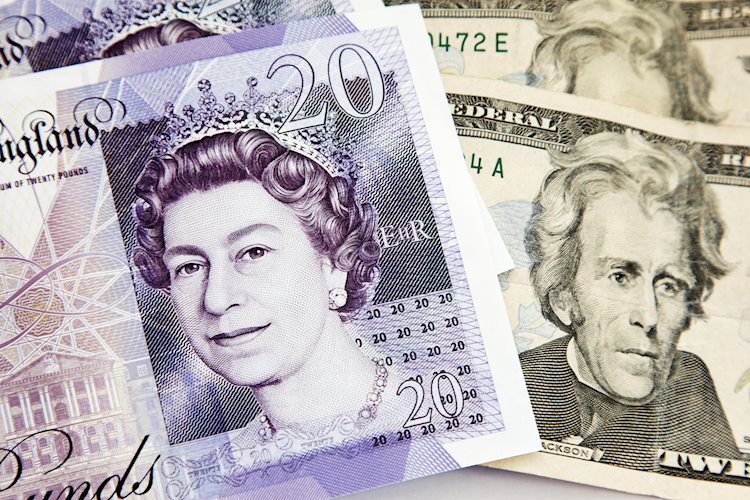
- The US Dollar gains 1% against the Japanese Yen, though down 0.8% against UK Pound Sterling
- Traders see BoJ missing the window of opportunity for a hike.
- The US Dollar Index recovered on Friday, though not enough to change sentiment.
The US Dollar (USD) is in a standstill, ahead of this Tuesday’s US opening bell. The Greenback was holding good cards to jump back into the green, with over 1% profit against the Japanese Yen triggered by a disappointing Bank of Japan rate decision. Ahead of the US opening bell, Pound Sterling (GBP/USD) is pushing back against that 1% profit for the Greenback with a 0.80% loss for the Greenback.
On the economic front, the Housing Data is not helping neither with no big moves and even contractions in Building Permits. Meanwhile geopolitical tensions in the Red Sea are easing fast with all major freight shipping companies deviating their float from the region. This means longer and more expensive travel routes via Africa, which means some inflationary pressures coming for January for the consumer.
Daily digest Market Movers: A lot for nothing
- The European Central Bank (ECB) is trying to backtrack on earlier statements that rate cuts for 2024 are not on the cards. ECB member François Villeroy de Galhau said this Tuesday morning that the ECB should cut in 2024 after a plateau of holding rates steady.
- The Bank of Japan (BoJ) has probably missed its window of opportunity to hike out of negative rates. BoJ Governor Kazuo Ueda said that Japan is heading to 2% inflation under current conditions, and even gave forward guidance that the January meeting is not the right moment to adjust monetary policy. It looks that both inflation and macroeconomic conditions for Japan are heading back to normal levels which might never demand for monetary policy to strengthen.
- Housing data was a bit of a let down for markets:
- Monthly Building Permits went down by 2.5% from 1.498 million to 1.46 million.
- The November Housing Starts number jumped by 14.8% from 1.359 million to 1.56 million.
- The Redbook Index jumped marginally from 3.4% to 3.6%.
- Asian equities are welcoming the standstill at the BoJ, and are popping higher. The Japanese Nikkei index is up over 1.4%. European and US equities are going sideways. In the US tech giant Apple is weighing now that the Chinese government has completely barred Apple products on the work floor. Domestically Apple is facing headwinds as well, as its Iwatch Ultra and 9 series are halted for sale because of a patent dispute on one of its technologies.
- The CME Group’s FedWatch Tool shows that markets are pricing in a 91.7% chance that the Federal Reserve will keep interest rates unchanged at its January 31 meeting. Around 8.3% expect the first cut already to take place.
- The benchmark 10-year US Treasury Note trades near 3.89%, and looks to be forming a floor. With the BoJ now not hiking, US notes are gaining a few basis points
US Dollar Index Technical Analysis: Closing time
Central Banks are having busy days in this very last normal trading week of 2023. From left and right central bankers are pulling everything out of their toolkit to tweak earlier mismanaged monetary policy communication. For the Federal Reserve, several members are pushing back against the markets that cuts are not going to come that quick. Several ECB members are now also backtracking and saying that cuts will come for sure in 2024 after European Central Bank President Christine Lagarde surprised them by saying cuts are not under consideration at all, at last week’s meeting. The narrative is changing again, and could switch back in full in favour of the US Dollar Index (DXY).
Still, US Dollar bulls have their work cut out to salvage what was lost last week. On the daily chart, look for 103.00 as the first level to keep an eye on. Once trading above there, the 200-day SMA at 103.50 is the next important level to get to in its recovery.
To the downside, the pivotal level at 101.70, the low of August 4 and 10 is vital to hold. Once broken, look for 100.82, which aligns with the bottoms from February and April. Should that level snap, nothing will stand in the way of DXY heading to the sub-100 region.
Inflation FAQs
Inflation measures the rise in the price of a representative basket of goods and services. Headline inflation is usually expressed as a percentage change on a month-on-month (MoM) and year-on-year (YoY) basis. Core inflation excludes more volatile elements such as food and fuel which can fluctuate because of geopolitical and seasonal factors. Core inflation is the figure economists focus on and is the level targeted by central banks, which are mandated to keep inflation at a manageable level, usually around 2%.
The Consumer Price Index (CPI) measures the change in prices of a basket of goods and services over a period of time. It is usually expressed as a percentage change on a month-on-month (MoM) and year-on-year (YoY) basis. Core CPI is the figure targeted by central banks as it excludes volatile food and fuel inputs. When Core CPI rises above 2% it usually results in higher interest rates and vice versa when it falls below 2%. Since higher interest rates are positive for a currency, higher inflation usually results in a stronger currency. The opposite is true when inflation falls.
Although it may seem counter-intuitive, high inflation in a country pushes up the value of its currency and vice versa for lower inflation. This is because the central bank will normally raise interest rates to combat the higher inflation, which attract more global capital inflows from investors looking for a lucrative place to park their money.
Formerly, Gold was the asset investors turned to in times of high inflation because it preserved its value, and whilst investors will often still buy Gold for its safe-haven properties in times of extreme market turmoil, this is not the case most of the time. This is because when inflation is high, central banks will put up interest rates to combat it.
Higher interest rates are negative for Gold because they increase the opportunity-cost of holding Gold vis-a-vis an interest-bearing asset or placing the money in a cash deposit account. On the flipside, lower inflation tends to be positive for Gold as it brings interest rates down, making the bright metal a more viable investment alternative.
Read the full article here