

Unlock the Editor’s Digest for free
Roula Khalaf, Editor of the FT, selects her favourite stories in this weekly newsletter.
The US has indefinitely waived sanctions on a key refinery in Germany owned by Russian oil company Rosneft, sparing Berlin the risk of major supply disruptions.
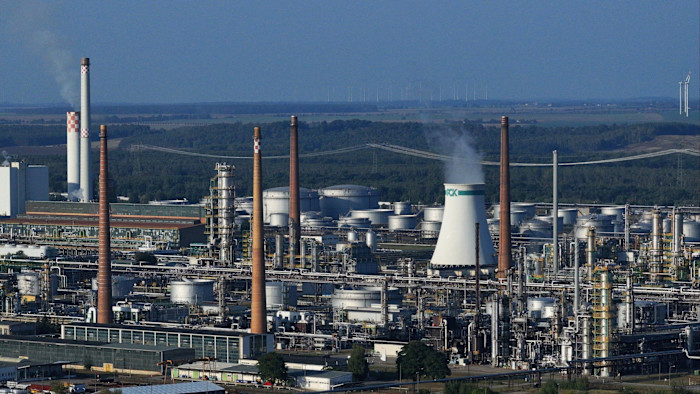
The exemption, issued by the US Treasury on Thursday, allows transactions with Rosneft’s German subsidiaries, including the PCK oil-processing plant in Schwedt, which supplies 90 per cent of the petrol, kerosene and heating fuel to Berlin, its airport and the surrounding state of Brandenburg.
It follows a trip by German Chancellor Friedrich Merz to Washington earlier this week, during which he appeared to strike a warm rapport with US President Donald Trump.
The German government raced to secure a six-month exemption for the Rosneft refineries when Washington imposed sanctions on Rosneft and Lukoil in October. The sanctions are intended to cut Russian oil revenues and reduce funding for Vladimir Putin’s full-scale invasion of Ukraine.
The six-month exemption was due to expire on April 29, threatening the Schwedt plant with insolvency and potentially forcing the government to nationalise it and organise thousands of trucks to supply the German capital with fuel.
Katherina Reiche, German economy minister, said: “The decision by the US authorities is a strong signal of close transatlantic solidarity in sanctions policy.”
She added: “This clarity is of paramount importance for the PCK refinery in Schwedt and the entire region.”
In response to Moscow’s invasion of Ukraine in 2022, the German government placed the Rosneft subsidiaries under the trusteeship of the Bundesnetzagentur (BNA), the country’s federal energy regulator. The move preceded an EU-wide embargo on Russian crude.
While the German government controls the Schwedt refinery’s operations, Rosneft still controls more than 50 per cent of its shares. The plant, which sits on the Druzhba pipeline and was configured to process Russia’s main high-sulphur “Urals” grade of crude, is now mainly supplied with Kazakh crude. But without investment or future prospects, its operations have been slowly deteriorating.
Christian Görke, an MP for Die Linke, said that the new US exemption was “merely a sedative” that “does not provide lasting security” and called for the government to expropriate Rosneft to seize the assets.
“The US government, with its unpredictable president, has already reversed many decisions and could do so again at any time,” Görke said. “The only truly secure option is for the public sector to acquire the Rosneft shares. This would also finally bring clarity to the ownership structure, securing the urgently needed investments at the site.”
Read the full article here