

Oil futures moved lower on Wednesday, pressured by U.S. government data showing a fifth consecutive weekly climb in domestic commercial crude inventories.
However, a report that said major oil producers in OPEC+ may consider extending their voluntary production cuts into the second quarter which may help to limit losses for oil.
Price moves
-
West Texas Intermediate crude
CL00,
-0.55%
for April delivery
CL.1,
-0.55% CLJ24,
-0.55%
fell 52 cents, or 0.7%, to $78.35 a barrel on the New York Mercantile Exchange. -
April Brent crude
BRNJ24,
-0.14% ,
the global benchmark, was down 16 cents, or 0.2%, at $83.49 a barrel on ICE Futures Europe. May Brent
BRN00,
-0.15% BRNK24,
-0.15% ,
the most actively traded contract, declined by 56 cents, or 0.7%, at $82.10 a barrel on ICE Futures Europe. -
March gasoline
RBH24,
-3.37%
shed 2.2% to $2.2932 a gallon, while March heating oil
HOH24,
-3.72%
lost 2.9% to $2.6661 a gallon. -
Natural gas for April delivery
NGJ24,
+4.81%
traded at $1.854 per million British thermal units, up 2.5% on its first full trading day as a front-month contract.
Market drivers
“Crude stocks built once again as refinery runs continue to hold well below year-ago levels amid both planned and unplanned maintenance” and as the outage at BP’s
BP,
Whiting refinery drags on, Troy Vincent, senior market analyst at DTN, told marketWatch.
Weekly declines in U.S. petroleum product stocks reflect this weakness in oil refinery runs, but even the draws to refined products were limited given the continued weakness in domestic demand, he said.
In the U.S. Wednesday, the EIA reported that domestic commercial crude inventories rose by 4.2 million to 447.3 million barrels for the week ending Feb. 23. The EIA has now reported crude supply gains for five weeks in a row.
On average, analysts had expected the report to show an increase of 2 million barrels, according to a survey conducted by S&P Global Commodity Insights. Tuesday, the American Petroleum Institute reported a crude inventory rise of 8.4 million barrels, according to a source citing the data.
The EIA report also revealed weekly supply declines of 2.8 million barrels for gasoline and 500,000 barrels for distillates. The S&P Global Commodity Insights analyst survey showed forecasts for inventory declines of 2.1 million barrels for gasoline and 500,000 barrels for distillates.
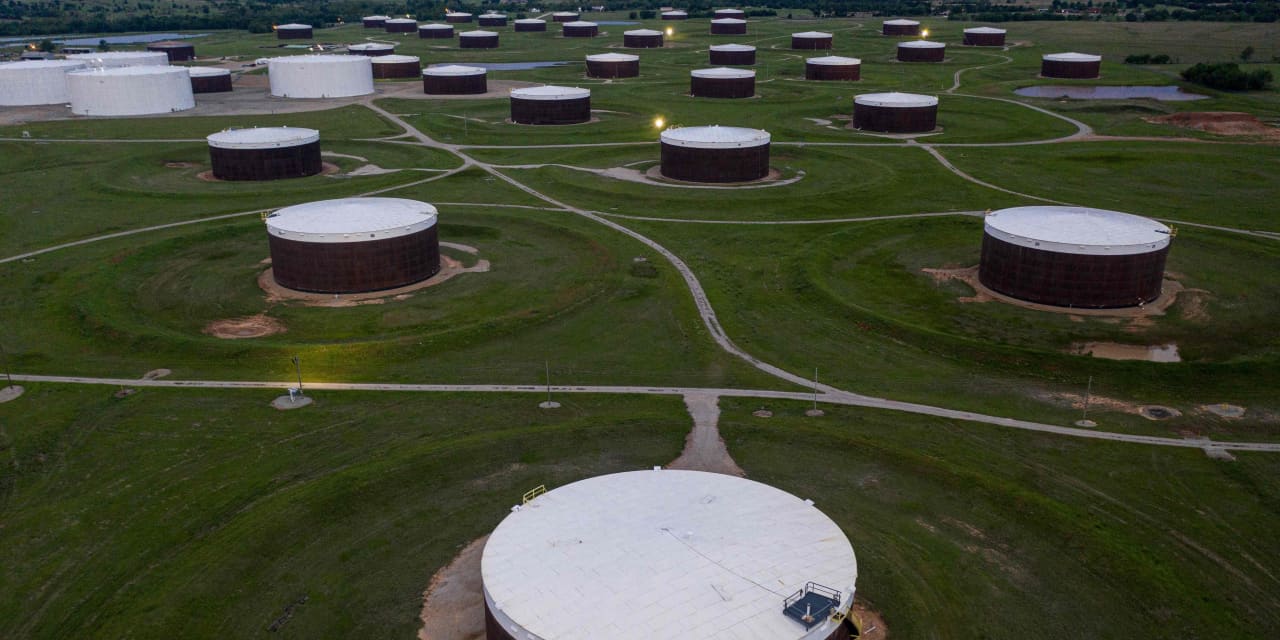
U.S. oil production was unchanged in the latest week, holding at a record 13.3 million barrels a day, the EIA said, while crude stocks at the Cushing, Okla., Nymex delivery hub were up 1.5 million barrels at 31 million barrels.
Although U.S. crude stocks have been building, “the global market has been tightening,” said Vincent. “This is evident from examining time spreads which have become increasingly backwardated as we have moved through February.” Backwardation refers to a situation in crude contract values where prices for oil for delivery in the near future are higher than those for later deliveries.
DTN’s first half of 2024 outlook forecasts that OPEC+ may be forced to continue to extend output cuts beyond the first quarter “in order to support prices, and we continue to believe that this will be the case,” said Vincent.
OPEC+, made up of the Organization of the Petroleum Exporting Countries and its allies, including Russia, was weighing an extension of voluntary production cuts into the second quarter, Reuters reported, citing unnamed sources. The voluntary reductions expire at the end of the first quarter and the report said a decision on an extension is expected in the first week of March.
OPEC+ agreed in November to voluntary cuts of 2.2 million barrels a day in the first quarter of 2024, with Saudi Arabia rolling over its voluntary cut of 1 million barrels a day.
“Since announcing the voluntary cuts at the end of November 2023, ICE Brent has traded soft amid demand concerns and have just recovered recently only to November levels” of $83 a barrel, wrote Ewa Manthey and Warren Patterson, strategists at ING, in a note. ”The demand prospects remain muted in the short-term due to the economic slowdown and the group may need to keep cuts in place to maintain market balance.”
Commodities Corner: War wasn’t enough to budge oil prices. Here’s what could spark a big move.
Read the full article here