

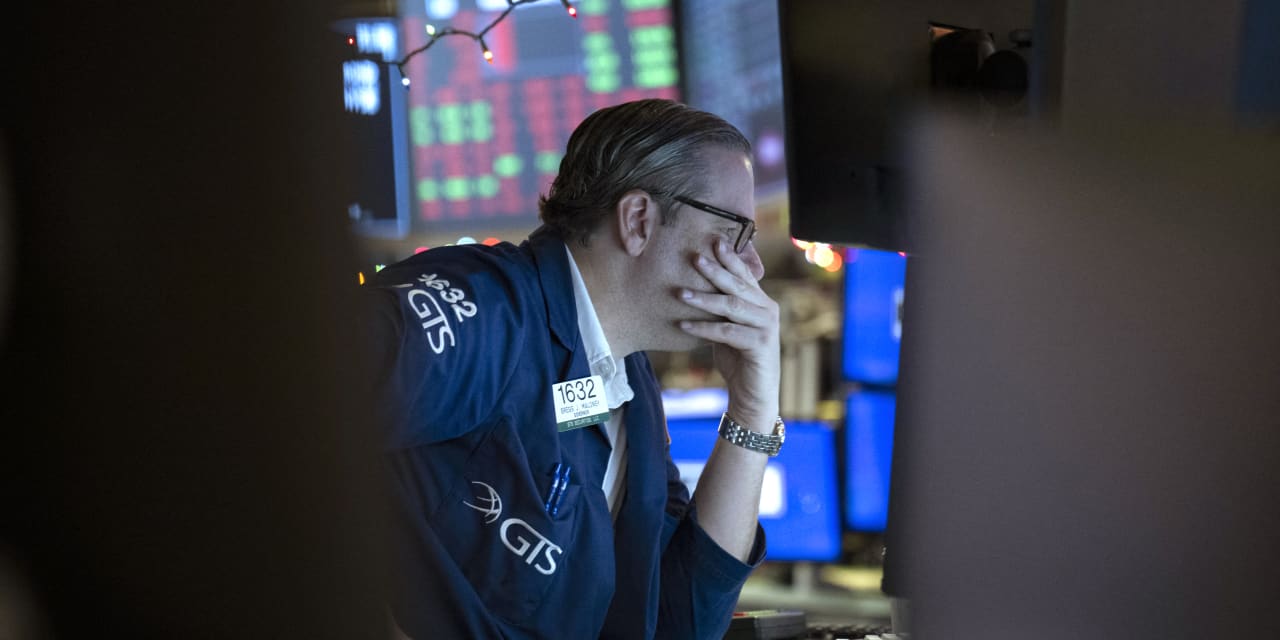
While investors are counting on a benign economic backdrop in 2024, at least one economist warns that inflation and interest rates could still throw a spanner in the works.
Much of the stock market’s year-end rally stemmed from increased investor confidence in a soft landing for the world’s largest economy, in which interest-rate hikes slow inflation’s pace without triggering a recession. Indeed, a quick look at the numbers—from the labor market to consumer spending—suggests the Fed has managed to wrestle inflation down from above 9% without harming the economy.
If that Goldilocks scenario seems too good to be true, that’s because it might be, according to one economist who argues inflation hasn’t been fully conquered.
“It is misleading to say that Fed hikes have not had any negative impact on the economy,” Torsten Sløk, Apollo Global Management chief economist, says.
The Fed’s aggressive rate increases actually pumped the brakes fairly dramatically on cyclical areas of the economy—housing being the poster child here, Sløk wrote in an economic update Thursday. But the slowdown in those sectors was largely overshadowed by strength in noncyclical components, like those related to travel and leisure.
“Fed hikes had a very negative effect on the interest rate-sensitive parts of the economy, most notably housing, and the result was a decline in housing inflation,” the economist highlights. “With housing having a 40% weight in the consumer price index (CPI) basket, the result was a decline in headline and core inflation.”
This situation demonstrates why inflation has been falling, but so many people feel they aren’t enjoying any sort of break from high prices across a range of products and services.
Americans’ willingness to keep shelling out for experiences that had been on hold during the pandemic—like dining out and vacations—has helped keep the economy strong, as consumer spending accounts for two-thirds of U.S. GDP. Likewise, ongoing strong economic data and expectations for eventual rate cuts have further helped markets rally.
The upshot, Sløk writes, is “the economy will reaccelerate over the coming months, which will put renewed upward pressure on inflation.” Since that is the central bank’s big worry, it will likely keep the Fed more hawkish than some would like, he warns.
“In short, the Fed is not done fighting inflation,” he writes. “As a result, it is too early to argue that this is a soft landing because both the cyclical and non-cyclical components of GDP are likely to be solid over the coming months.”
That, of course, is where the good news turns into bad news for investors. A strong near-term economy sounds like a good thing, but not if it means the Fed doesn’t deliver the rate cuts that the market has already priced in.
Certainly, December’s CPI reading appears to show that the fight against inflation isn’t over, as prices rose 3.4% year over year last month. Fed speakers have also made hawkish remarks about a higher-for-longer interest rate environment, and dwindling hopes for looser monetary policy has weighed on the stock market to start the year.
That disconnect, and investors’ need to readjust to reality, could cause market volatility at the very least. And if tighter-for-longer policies eventually begin to bite harder into economic growth, that would further endangering a soft landing and open the door to a potential downturn. Add to that the potential stock market headwinds from politics here and abroad this year, and the economic picture starts looking anything but assured.
In fact, Deutsche Bank has repeatedly argued that the lag between economic data and monetary policy means that a 2024 recession would be right on time, based on historical patterns.
Still, at least some strategists believe any recession will be a mild one, and that the
S&P 500
can still end 2024 on a high note after this rocky start.
Ultimately, you might not be able to fight the Fed; but it’s good to remember it isn’t infallible.
Write to Teresa Rivas at [email protected]
Read the full article here