

If half a billion dollars of taxpayers’ money gets dropped down a well and nobody hears a sound, did taxpayers really lose out?
That’s a topical question following this week’s huge bailout of public-sector pensions in Michigan — an event that got hardly any attention at all.
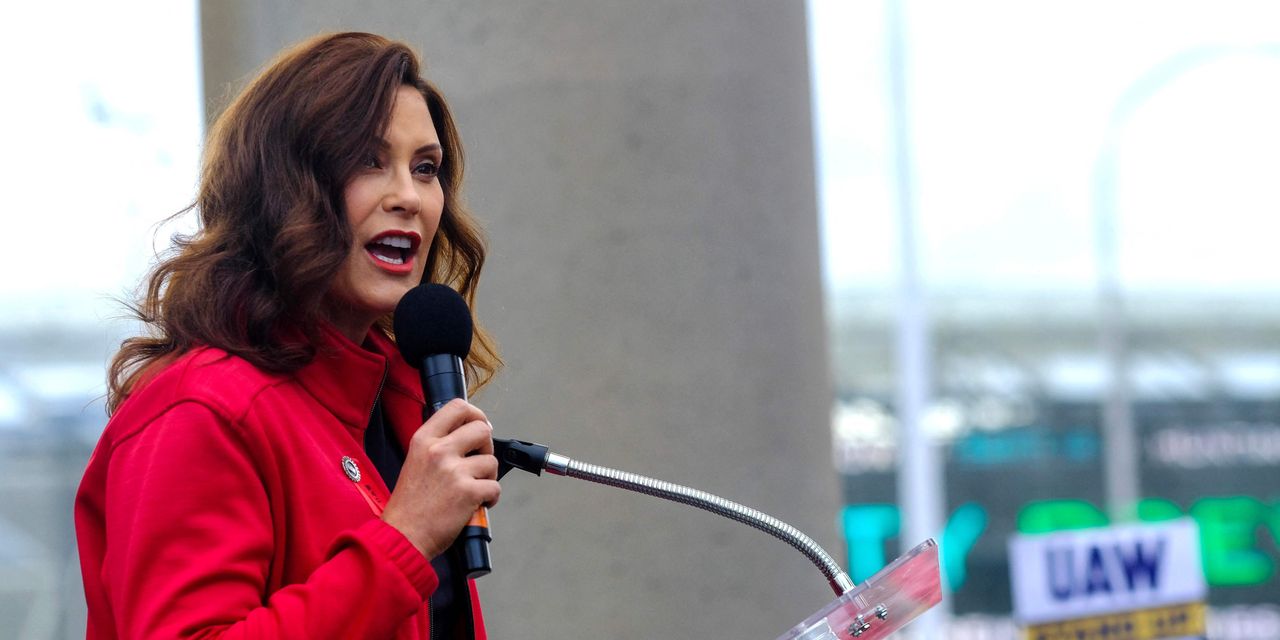
Michigan Gov. Gretchen Whitmer — the Democrats’ backup quarterback for next year’s presidential race, many think — just dropped $553 million into 123 struggling local pension funds throughout the state.
“After a lifetime of hard work, Michigan seniors deserve to retire with dignity,” the governor said in a statement announcing the bailout. “Today’s Protecting MI Pension Grants will ensure that Michiganders who served our communities as police officers, firefighters, sanitation workers, and in so many other invaluable professions, will receive the stable, secure retirement that they earned.”
The grants came from a fund created for just this purpose and funded by taxpayers. And who is going to argue with this? Anyone suggesting the state do otherwise would sound like a parody of the Grinch. The retirees will appreciate the benefit. And did the taxpayers feel the pain?
There will be more of this ahead. A new report from pension consultants Milliman argues that the top 100 state and local pensions in the U.S. lost another $74 billion in August. Their overall funded status dropped from 76.8% to 75.3%.
That means they no longer have 77 cents in assets for each dollar of liabilities. Now they have 75 cents. (This is all in discounted, present-value terms.)
Put another way, the funding shortfall — the gap between what the funds owe and what they actually have — is now $1.5 trillion.
State and local governments are already having to deal with this in real time, as obligations come due. Teachers, firefighters, cops and other public employees are retiring. They need the money they were promised. It is being found somehow — by borrowing more, by taxing more or by cutting spending elsewhere and thereby shunting aside other public priorities.
In Chicago, 80% of property taxes now go to bail out public-sector pensions. Nationwide, spending on schools and teachers is being squeezed to bail out teachers’ pensions.
As with state and local pensions, so it is likely to be with Medicare and Social Security when their even bigger obligations come due. Both are predicted to hit the financial wall within 10 years: Medicare in 2031, Social Security in 2033.
Unless the wolf lies down with the lamb and water starts flowing uphill, you have to assume these programs will remain fully funded. Good luck to any politician who talks about cutting them: There is some reason to believe that loose talk on this topic from Kevin McCarthy helped cost the Republicans their anticipated “red wave” in the 2022 midterm elections.
What does all of this mean? Do the math.
Social Security’s funding gap is $22.4 trillion, according to the trustees. That’s in today’s money. Actually, it’s only the present value of the extra money needed to pay obligations for another 75 years: The so-called “infinite” gap is much larger still.
Medicare’s funding gap is $4.4 trillion.
Then there’s that $1.5 trillion for state and local pension funds — which technically aren’t liabilities of federal taxpayers, but which are going to be paid one way or another.
Total value: $28.3 trillion.
That amount is more than 100% of America’s annual gross domestic product. It is also just under 20% of the total net worth of all U.S. households, which was $145 trillion at last count.
Are you ready for a 20% tax on all your assets?
The gap also amounts to more than half the value of all U.S. equities and about 150% of the wealth held by the country’s richest 0.1%.
This, incidentally, is in addition to the official national debt, which is currently estimated to be around $26 trillion, or just under 100% of GDP — and rising.
They say the big news in politics six months from now is probably going to be something nobody is even thinking about right now. The big news in politics for the next decade is going to be pensions, and where to find that extra $28 trillion.
Now read: ‘If we do nothing, Social Security will be bankrupt in 10 years,’ Republican presidential candidate Nikki Haley says
Related: Nearly 20% of seniors on Medicare are ‘underinsured’ — and Medicare Advantage is no better
Read the full article here