

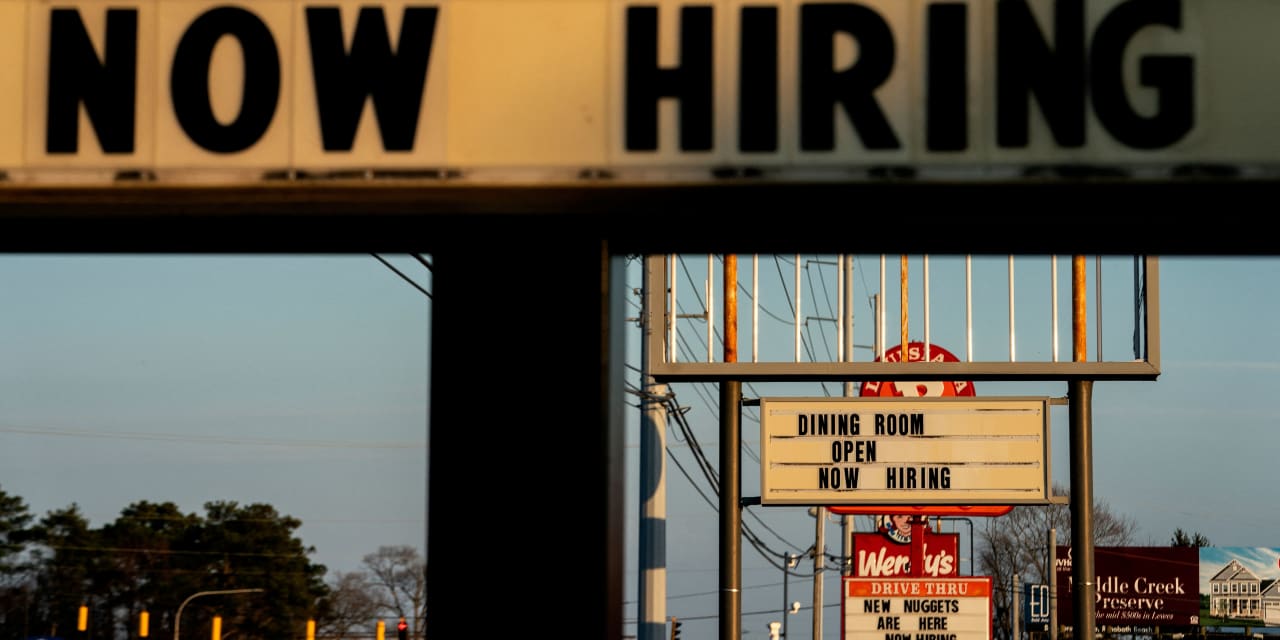
The U.S. labor market continues to generate healthy job growth, mitigating recent fears of a recession and helping to keep the economy on track toward a soft landing.
The U.S. added 199,000 jobs in November, according to data released Friday by the Bureau of Labor Statistics. That was a stronger showing than the 175,000 forecast by economists surveyed by FactSet, but in line with other economists’ expectations. The conclusion of major national strikes helped push payrolls higher.
While November payroll growth was strong and the job market looks resilient, the headline number was still below the average monthly gain of 240,000 over the prior 12 months. Payroll gains are becoming more concentrated, mainly in government and healthcare—sectors that are largely insulated from the effects of higher interest rates.
Manufacturing experienced an uptick of 28,000 payrolls largely due to the conclusion of the United Auto Workers strike against Ford Motor, General Motors, and Stellantis, rather than new job growth.
The unemployment rate fell to 3.7% in November, a larger-than-anticipated decline and down from the 3.9% rate clocked in October. This was driven by the fact that the number of employed individuals in the bureau’s household employment survey increased by 747,000 last month. The slight uptick in the labor-force participation rate—from 62.7% in October to 62.8% in November—contributed to the rest of the decline.
“This was a much better-than-expected payroll report, more so because it puts to bed fears about a deteriorating labor market amid a rising unemployment rate over the last several months,” writes Sonu Varghese, global macro strategist at Carson Group.
Despite Friday’s strong reading, most economists and analysts don’t expect the report to materially change the calculus of the rate decision at next week’s Federal Open Market Committee meeting. The likelihood that the Fed will keep its target rate at 5.25%–5.5% is currently at 98.2% following the release of the data, according to the CME FedWatch Tool.
The Fed will likely still hold rates steady at the coming meeting, the lack of more material softness in the labor report could prompt policy makers to stay the course with higher rates for longer than the markets have recently begun to believe, writes Jason Pride, Glenmede’s chief of investment strategy and research. “Fed Chair Powell will likely find reports like this, along with the recent dramatic shift in investor expectations, as creating a need for more hawkish messaging at the upcoming Fed meeting,” he says.
Friday’s data release also showed that there continues to be pressure on labor costs. The pace of wage growth—a metric Federal Reserve officials watch closely because wage growth feeds directly into services inflation—proved fairly resilient in November. Average hourly earnings for all employees rose 0.4% in November, slightly faster than the 0.3% month-over-month gain expected and reversing the cooling seen in October.
In the last 12 months, wages have increased by 4%, in line with expectations from economists surveyed by FactSet. And once downward revisions to the prior months’ data are factored in, wage growth remained steady at 4% recorded in October. But that is the slowest pace since June 2021.
Wages remain above where the Fed would like to see, but the end of the strikes likely contributed to stronger growth in November relative to October, and therefore wage pressures should cool further in the months ahead.
The number of hours worked in November hit 34.4 hours a week last month, edging up slightly by 0.1 hour from October, according to the bureau. While economists expected the level to remain the same or even slow, the slight uptick still represents a decline from the high of 35 hours hit in January 2021. This data point is typically seen as an indicator of business growth.
Seasonal shifts in employment and increased strike activity have injected a “considerable degree of noise” into the jobs data, making it more difficult to decode employment trends, writes EY Senior Economist Lydia Boussour.
There is still evidence the labor market’s momentum is cooling, albeit slowly and unevenly. The bureau, for example, again revised down September’s blockbuster jobs growth by 35,000 to 262,000 for the month.
“Sorting through the noise, the picture that is emerging is one of a resilient but cooler labor market. Job gains have become less broad-based, labor demand continues to fall, and jobless claims are creeping higher in a sign of softer conditions,” Boussour writes.
Write to Megan Leonhardt at [email protected]
Read the full article here