

Unlock the Editor’s Digest for free
Roula Khalaf, Editor of the FT, selects her favourite stories in this weekly newsletter.
Britain’s National Wealth Fund is shifting away from using taxpayer money to back third-party investment funds in favour of bolstering private sector investment in infrastructure.
The wealth fund, formerly known as the UK Infrastructure Bank, will set out in January a revised strategy to encourage private investment in infrastructure by providing financing for projects in line with government policies including regional growth and clean energy.
In a statement to the Financial Times, Oliver Holbourn, who joined as chief executive at the National Wealth Fund this month, said that the “priority moving forwards would be direct investments or co-investments versus using externally managed funds”.
Third-party funds often charge investors high fees, making them unattractive to the NWF.
The NWF, which has £22bn of taxpayer funding, had been criticised by MPs for investing in third-party funds rather than directly into infrastructure projects as well as for funding projects that already draw private capital.
The NWF’s investments in third-party funds included a £100mn contribution to an infrastructure fund managed by Octopus Investments, called the Octopus Sustainable Infrastructure Fund and up to £250mn in NextEnergy Capital’s £500mn solar fund.
Last year it invested in Greensphere Capital, which was founded by the veteran investor Jon Moulton in 2011 and is invested in bioscience and renewable energy assets.
A parliamentary investigation by a Treasury select committee into the NWF earlier this year concluded that the organisation’s name was “misleading”.
The National Wealth Fund is not a conventional sovereign wealth fund such as Norway’s, which is funded by revenues from natural resources such as oil and gas. Instead it is paid for with public taxes and borrowing and is one of several government-backed investment funds alongside the British Bank and Innovate UK.
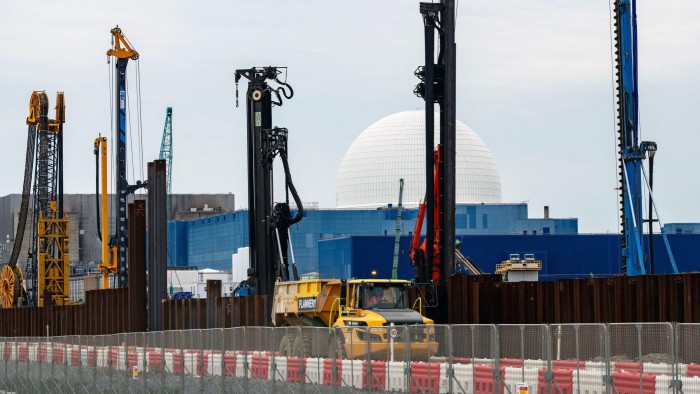
The bank’s biggest deal is the Sizewell C nuclear project where it will provide up to £36.6bn of loans to help with its construction.
The NWF’s loans to Sizewell C will de-risk the project for private investors which include Centrica, France’s EDF and La Caisse and Amber Infrastructure, and has been held up as an example of how to attract other investors.
It requires consumers to pay the finance charges during the construction period as a surcharge on their bills and leaves most of the risk of cost or time overruns with taxpayers.
The NWF also announced a £600mn loan to Spanish energy giant Iberdrola to upgrade the British power grid.
The bank has invested £5.4bn in debt and equity since its inception four years ago, of which £4.6bn has been allocated to private sector projects, and £0.8bn has been invested in local authority projects, the bank’s annual report said.
Although the NWF’s remit states that each investment should deliver a return so far the bank has overall has made a loss. For the last year, the organisation made a reported loss of £152.2mn before tax, up from £85.6mn in the previous year.
The NWF said a “loss was expected at this stage of growth in our portfolio” but also highlighted it was “higher than budgeted due to specific challenges affecting certain assets and market conditions in the digital infrastructure sector”.
This article has been amended to correct the former name of the National Wealth Fund
Read the full article here