

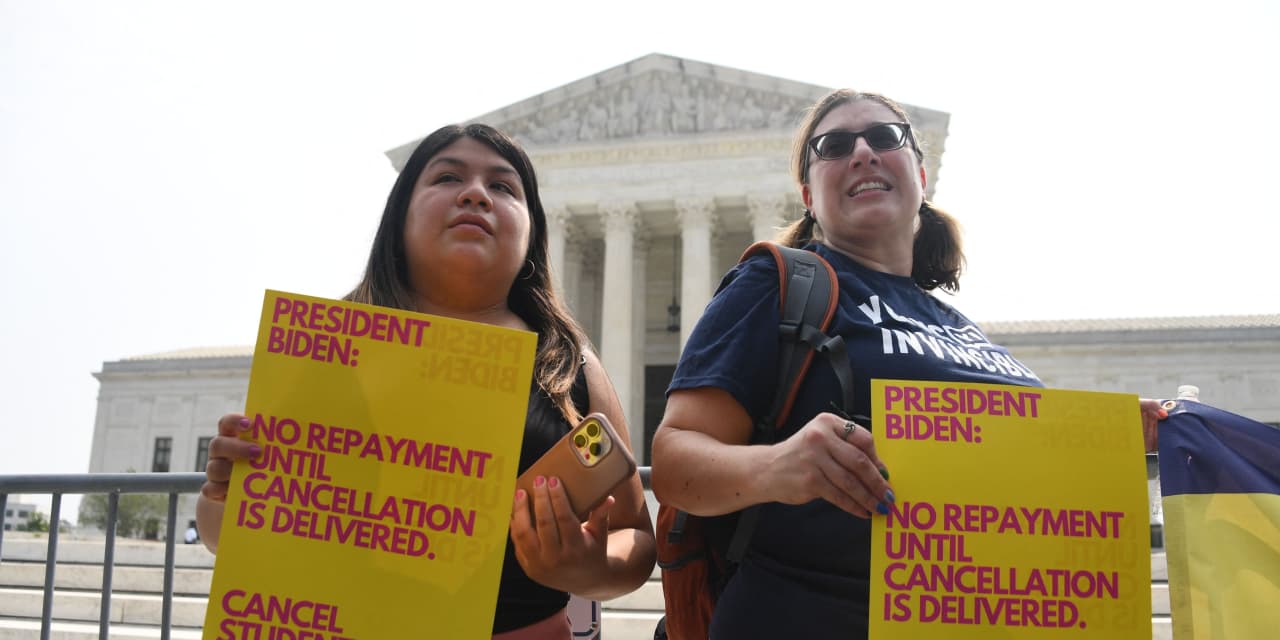
A large share of borrowers missed their October student-loan payment, the latest sign of the challenges borrowers and the student-loan system are facing returning to repayment after a more than three-year pandemic-era pause.
Roughly 40% of the 22 million borrowers with a bill due in October hadn’t made the payment by mid-November, the Department of Education announced Friday.
It wasn’t clear from the data whether borrowers missed payments because they couldn’t afford to make them, because they faced logistical challenges accessing repayment plans, or both. Activists have also launched a debt strike asking borrowers who can avoid making student-loan payments without consequences to do so, as a way to highlight issues in the student-loan system.
“While most borrowers have already made their first payment, others will need more time,” James Kvaal, the undersecretary of education, wrote in a blog post announcing the data. “Some are confused or overwhelmed about their options. We want to make sure borrowers know that our top priority is to support student-loan borrowers as they return to repayment.”
The Biden administration has launched initiatives aimed at smoothing the return to repayment, but the data indicates some borrowers are still struggling. Borrowers who miss payments through fall of 2024 won’t be reported as delinquent or in default and won’t face collection activity. In addition, the chief operating officer of Federal Student Aid wrote credit bureaus last week warning them not to ding borrowers for missed payments during the restart of student-loan payments.
Officials also launched a new repayment plan, called SAVE, aimed at making student-loan bills more manageable. Accessing the new plan requires servicers to review and approve borrowers’ applications. But over the past few months, borrowers have complained of long call wait times and challenges receiving accurate information from their servicers.
The Biden administration has said that it will hold servicers accountable for throwing up obstacles to borrowers’ progress. Already, the Department of Education moved to punish one servicer over failing to send timely billing statements.
Servicers have cited funding cuts and a crush of new programs starting at once as reasons the return to repayment has been challenging for borrowers and the system more broadly.
Over the past several months, the Biden administration has launched initiatives aimed at smoothing the pathway to cancellation for borrowers who already qualify under the law. Those have resulted in about $127 billion of debt relief for about 3.6 million borrowers so far.
The Department of Education is also in the midst of a process to determine the scope of its new mass-debt-forgiveness plan, after the Supreme Court struck down its initial effort in June. The plan likely won’t be available for several months, but messaging from the agency indicates it would target borrowers who have been paying their debts for several years or borrowers who were scammed by their schools, among other populations.
Read the full article here