

A rocky year for offshore wind power in the U.S. got even worse over the past two weeks, with new signs that the industry’s big players are struggling to produce profits and might walk away altogether.
Danish company
Orsted
(ticker: DNNGY), the global leader in offshore wind development, says it expects to write down the value of its U.S. projects by up to 6 billion Danish krone, or about $860 million, due to higher costs driven by an inadequate supply chain in the U.S., high interest rates, and insufficient federal subsidies. Orsted shares fell 25% on the news last Tuesday and are down 41% this year. In addition, the Biden administration attempted to auction off leases to add offshore wind turbines in the Gulf of Mexico last week but only attracted two bidders and sold a lease on one of three parcels.
In the past year, several offshore wind projects along the East Coast have been delayed, and in some cases developers have backed out of contracts that they had signed with utilities to provide power to residents. In Massachusetts, developers of two projects expected to provide enough power for at least half a million homes have canceled their contracts this summer, citing escalating costs.
The problem is that inflation and a lack of a robust supply chain has made the projects much more costly—contracts that were signed before prices of items such as steel soared during the pandemic no longer make sense financially, the companies say.
It’s looking increasingly unlikely that the U.S. will be able to add 30 gigawatts of offshore wind power capacity by 2030, a goal President Biden announced in 2021. Barron’s detailed the potential for financial distress in the wind industry in July.
Orsted says it’s facing supplier delays at multiple projects, including Ocean Wind 1 in New Jersey, Sunrise Wind in New York, and Revolution Wind off Rhode Island and New York. Those delays have “knock-on effects” that are likely to lead to extra costs.
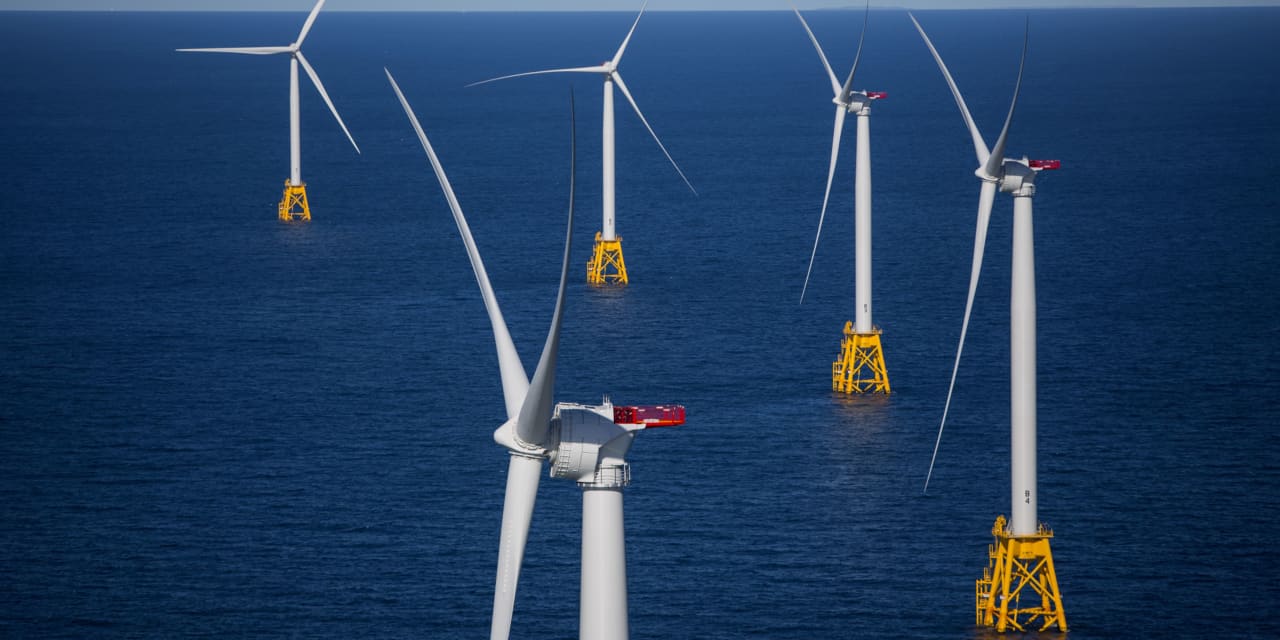
Rising interest rates threaten the valuation of existing wind projects, too. Block Island Wind Farm, one of only two existing offshore wind projects in the U.S., may also have to be impaired, the company said. A spokesperson said that any impairment at Block Island would be minor.
Orsted is looking to the federal government for more support. Projects can now qualify for a tax subsidy of 30% of their investment, but Orsted is lobbying the government to receive extra benefits that were originally meant for projects that use domestic materials or benefit communities that had been particularly dependent on fossil fuels. Other money for the projects might have to come from consumers, in the form of higher electricity prices. CEO Mads Nipper recently told Bloomberg that he thinks electricity prices will have to rise to support offshore wind projects and help the U.S. decarbonize.
“And if they don’t, neither we nor any of our colleagues are going to build more offshore,” Nipper said. “It’s very simple.”
Some states, such as Rhode Island, have balked at approving contracts that are so expensive they could lead to considerably higher consumer electricity rates.
Offshore wind isn’t expected to be the biggest source of renewable power in the U.S., but it can solve some problems that other renewables can’t. Gusts offshore are generally stronger and more consistent than on land, and turbines offshore can be so large—over 800 feet tall—that they can generate large amounts of power. Biden expects 10 million homes to be powered by wind by 2030. Other than Orsted, major companies planning wind projects include
Shell
(SHEL),
BP
(BP), and French utility
ENGIE
(ENGIY).
To reach its goals, the federal government has leased parcels off the East and West coasts, and last week held an auction for parcels in the Gulf of Mexico. But the auctions attracted little interest. Eventually, one of three parcels was bid out for $5.6 million to German utility
RWE
(RWEOY). Leases for parcels of ocean-bottom around New York last year went for over $700 million, rates that some analysts considered to be evidence of a bubble.
Some analysts expect the offshore wind industry to continue to face problems for months, though there’s reason to believe the industry will eventually bounce back. The government still wants the projects to happen and might have to make financial accommodations to get them started.
“There’s a lot of government push to do this and so we probably just need to see a bit of a pause period right now as we rethink what all this stuff is going to cost,” said Evercore analyst James West. He thinks that offshore wind’s rebound might start to take hold late next year.
Write to Avi Salzman at [email protected]
Read the full article here