

Published on •Updated
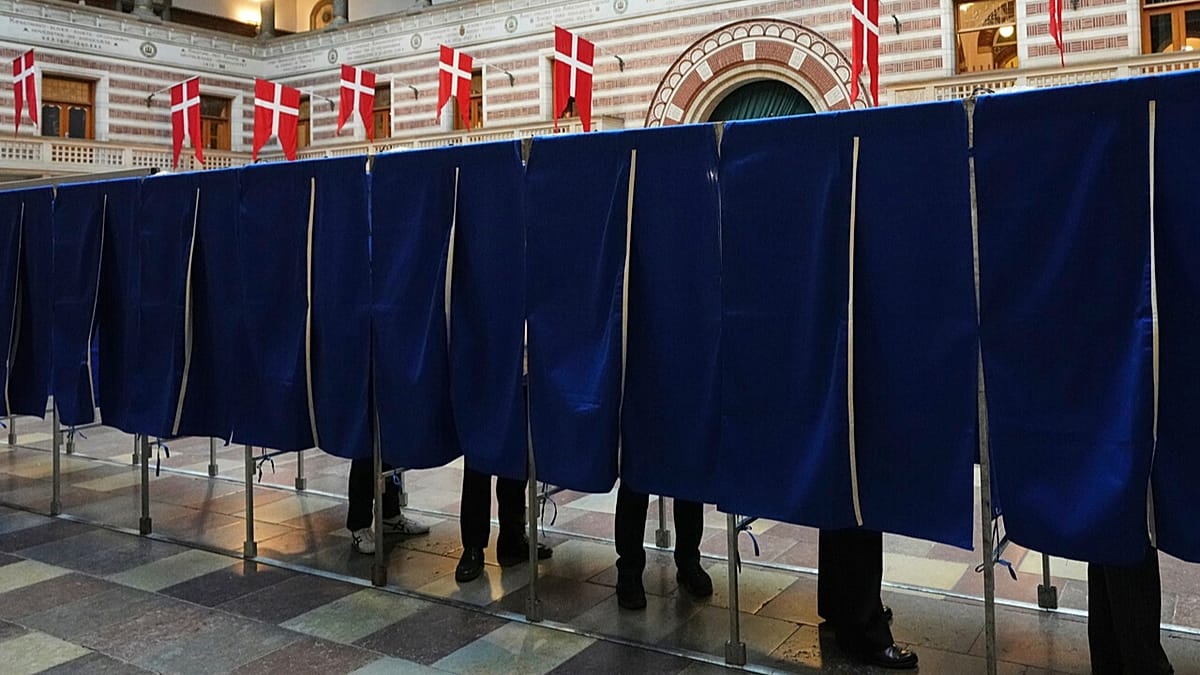
Danish voters went to the polls on Tuesday in a snap parliamentary election called by social democrat Prime Minister Mette Frederiksen, who is seeking a third term in the wake of a crisis sparked by US President Donald Trump’s push to take control of Greenland.
ADVERTISEMENT

ADVERTISEMENT
The latest polls give the current coalition behind Frederiksen a nine-seat lead over the right-wing bloc, but neither side is projected to win a majority of the 179 seats in Denmark’s parliament, the Folketing.
Frederiksen, a Social Democrat who has been in office since 2019, has been praised for her leadership after standing her ground against Trump’s repeated demands to annex Greenland, a semi-autonomous territory of the Kingdom of Denmark Trump claims the US needs for national security reasons.
In her second term, Frederiksen’s support had waned as the cost of living rose — something that, along with pensions and a potential wealth tax, has been a prominent campaign issue.
Frederiksen is known for strong support of Ukraine in its defence against Russia’s all-out invasion and for a restrictive approach to migration.
Challengers on the right
Seeking to counter pressure from the right and pointing to a possible surge in migration because of the Iran war, Frederiksen announced proposals this month that include a potential “emergency brake” on asylum and tighter controls on criminals who lack legal residence.
Her government had already unveiled a plan to allow the deportation of foreigners who have been sentenced to at least one year in prison for serious crimes.
Two centre-right challengers hope to replace Frederiksen as Danish premier. One is in her current government — Defence Minister Troels Lund Poulsen of the liberal Venstre (Left) party, which has headed several recent administrations.
The other is Alex Vanopslagh, 34, of the opposition Liberal Alliance (LA), which calls for lower taxes and less bureaucracy, and for Copenhagen to abandon its refusal to use nuclear power.
To the right, the anti-immigration Danish People’s Party (DF) looks well-placed to bounce back from a very weak showing at the last election in 2022.
Campaign focused on domestic issues
Greenland, which took up much of the government’s energy in recent months, has not been a significant issue in the campaign because there is broad agreement on its place in the kingdom.
In the wealthy nation of some 6 million people, the campaign has instead focused on domestic issues, including inflation, the welfare state, and high nitrate levels in agricultural water.
Frederiksen’s outgoing three-party administration was the first in decades to straddle the political divide. It remains to be seen whether this election will result in a repeat.
The four overseas seats held by Denmark’s two semi-autonomous territories, two for Greenland and two for the Faroe Islands, could tip the balance if the election result is very close.
The centrist Moderates or M party, led by Foreign Minister Lars Lokke Rasmussen, a two-time former prime minister, could also prove decisive if things go down to the wire.
Additional sources • AP, AFP
Read the full article here