

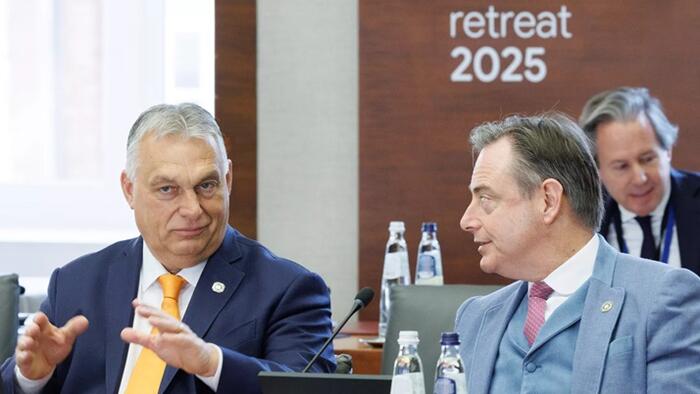
Ukraine is desperately seeking more money, which has been a persistent reality of the war, and the European Union is scrambling to find solutions amid a general Western war weariness which has already seen hundreds of billions poured into Kiev’s coffers.
Currently EU member states are rapidly advancing a plan to permanently freeze as much as €210 billion ($244.38 billion) in Russian state assets to finance Ukraine for at least the next two years. European Commission President Ursula von der Leyen is seeking to use a loophole to rush this through, based on invoking emergency powers to sanction the frozen assets on a permanent basis, instead of holding the funds based on current six-month renewals, which requires unanimous agreement from all member states.
The plan would see €90 billion (roughly $104.71 billion) released over the next two years. Von der Leyen’s scheme would allow for the plan to pass merely with a qualified majority, and so couldn’t be derailed by just a lone veto. Nations like Germany and Spain have already signaled their support.
EU leadership is rushing it forward to circumvent holdout Hungary in getting what’s being dubbed a “reparations loan” to Ukraine, and there’s also the idea that it would bolster the EU’s negotiating position in US-led peace negotiations.
EU summits chairman Antonio Costa has vowed to deliver the desired outcome by any means. “The leaders are to decide at a summit on December 18 in Brussels how to deliver on their pledge and Costa told reporters in Dublin he would keep them talking for days, if necessary, until they reach an agreement,” Reuters reports.
It will involve more than just overcoming the hurdle of Hungarian objections, however, given Belgium is not onboard at this point, and the bulk of the Russian funds are kept in Belgian banks.
For starters, Brussels fears immediate negative repercussions from Russia, which could deeply hurt its economy, and so wants guarantees ahead of any EU vote that all members would help absorb the impact.
Von der Leyen has acknowledged the issue, posting on X: “Belgium’s particular situation regarding the use of the frozen Russian assets is undeniable and must be addressed in such a way that all European states bear the same risk.” She added: “We agreed to continue our discussions with the aim of reaching a consensus at the European Council meeting on December 18.”
Belgium’s initial reaction was to call it “complete madness” – according to The Hungarian Conservative:
‘This is complete madness,’ [Belgian Prime Minister Bart] de Wever said of the proposal in October, according to POLITICO Brussels. The Belgian prime minister argued that the risk of legal and financial retaliation from Moscow is simply too great. He told his colleagues that if Russia were to win lawsuits against Belgium or Euroclear—which holds the frozen assets—the country would be forced to compensate the entire amount itself.
De Wever’s concerns are not unfounded. Reacting to the Commission’s proposal, Russian Foreign Ministry spokeswoman Maria Zakharova warned that any ‘illegal action’ involving frozen assets would provoke the ‘harshest reaction’, adding that Moscow is already preparing a package of countermeasures. Deputy Chairman of the Security Council Dmitry Medvedev described the plan as a ‘casus belli’, labelling the move tantamount to outright theft.
EU diplomats have been in back-and-forth negotiations with Belgium. Germany’s Chancellor Merz has also acknowledged, “What we decide now will determine Europe’s future: Belgium’s particular vulnerability in the issue of utilizing the frozen Russian assets is indisputable and must be addressed in such a way that all European states bear the same risk.”
💼 @PM_ViktorOrban: Brussels wants to seize frozen Russian assets, but we must first ask what countermeasures would follow. If Hungarian companies in Russia lose their assets, why should Hungary support such a move? pic.twitter.com/CBXd54f4PV
— Zoltan Kovacs (@zoltanspox) October 16, 2025
The European Commission is working on ‘safeguards’. “The Belgian government, along with Euroclear, are looking for financial guarantees from fellow EU member states before committing to supporting the plan,” Fox News writes. “De Wever fears that Belgium will ultimately be held responsible and be forced to pay back the assets that are seized in the event a sanctions deal is negotiated with Russia as a way to end the war in Ukraine.” But without doubt, the Kremlin has been brainstorming the punitive actions it could in turn unleash to make Belgium and Europe feel the pain.
Loading recommendations…
Read the full article here