

Authored by John Haughey via The Epoch Times (emphasis ours),
Five Persian Gulf nations that host U.S. military installations claim they have collectively shot down more than 1,500 Iranian missiles and drones since the United States and Israel launched their joint attack at 9:45 a.m. Tehran time on Feb. 28.
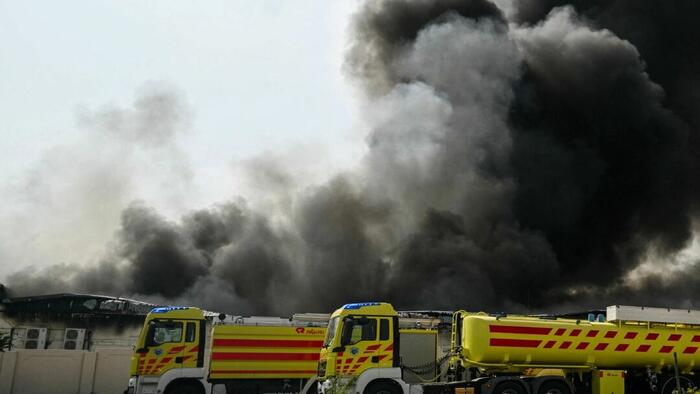
The United Arab Emirates (UAE)—whose forces have battled Tehran-backed Houthis in Yemen—has borne the brunt of the Iranian attacks.
While numbers are fluid and reported timelines varied, as of 6 p.m. ET on March 1—2:30 a.m. March 2 in Iran—the UAE Ministry of Defense reported it had knocked down 165 ballistic missiles, two cruise missiles, and more than 540 drones.
Debris from destroyed projectiles crashed into several Abu Dhabi residential neighborhoods, killing at least one civilian, the ministry reported, also stating that at least three people have been killed in Iranian strikes in UAE.
The attacks are “a blatant violation of national sovereignty and international law,” the ministry said in a statement, warning UAE would “take all necessary measures to protect its territory, citizens and residents, and to safeguard its sovereignty, security and stability.”
Bahrain’s military said March 1 that its air defense systems had intercepted at least 45 missiles and nine drones, with the U.S. Navy’s Fifth Fleet headquarters in Manama and a British navy base specifically targeted.
No casualties were reported at the U.S. and UK bases. British forces reported shooting down a drone in Manama. UK Prime Minister Keir Starmer on March 1 said the British have accepted a U.S, request to use its bases across the Middle East, including its large air base in Cyprus, to strike Iranian missile launchers.
Kuwait’s military reported it shot down nearly 100 missiles and almost 300 drones during the first 24 to 36 hours of the conflict.
The Iranian attacks focused on Ali Al-Salem Air Base where American and other international forces are stationed. Drones also struck Kuwait International Airport on Feb. 28, causing minor injuries and “limited damage.”
Italian Deputy Prime Minister Antonio Tajani, however, told Italian news outlet ANSA that a Kuwait International Airport runway sustained extensive damage.
Qatar’s Ministry of Defense said it shot down 65 ballistic missiles and at least 12 drones fired at it from Iran. “We possess the full ability to protect the country and fend off any external threat,” the Qatari ministry said, adding Qatar is “secure and stable,” although the country’s air space has been temporary closed to commercial traffic.
Two ballistic missiles struck the U.S. Al-Udeid Air Base causing no reported casualties and little damage, while a drone strike disabled an early warning radar installation.
Most U.S. Air Force airmen and aircraft normally stationed at Al-Udeid, including KC-135s in-flight refueling jets, C-17A Globemaster transports, and C-130 Hercules airlift transports, were moved to other bases in the Mediterranean and Diego Garcia in the Indian Ocean in the days preceding the attack.
Jordan’s armed forces reported March 1 that they had intercepted 13 ballistic missiles and knocked down nearly 50 drones targeting U.S. forces at Muwaffaq Salti Air Base.
“The armed forces engaged 49 drones and ballistic missiles targeting Jordanian territory today,” the Jordanian armed forces said in a statement, adding “13 ballistic missiles were successfully intercepted by Jordanian air defense systems, while drones were shot down.”
An undetermined number of missile and drone attacks have also been reported in Saudi Arabia, Iraq, and Syria.
U.S. forces at Harir Air Base in Erbil in northern Iraq’s Kurdistan area were attacked with missiles and drones with no casualties and little damage reported. British forces report they knocked down several missiles in Iraq.
Loading recommendations…
Read the full article here