
Iran Intel Chief Killed As Israel Grants IDF ‘Free Hand’ To Eliminate Leaders; Trump Muses Tehran Could Be ‘Finished Off’

Summary:
-
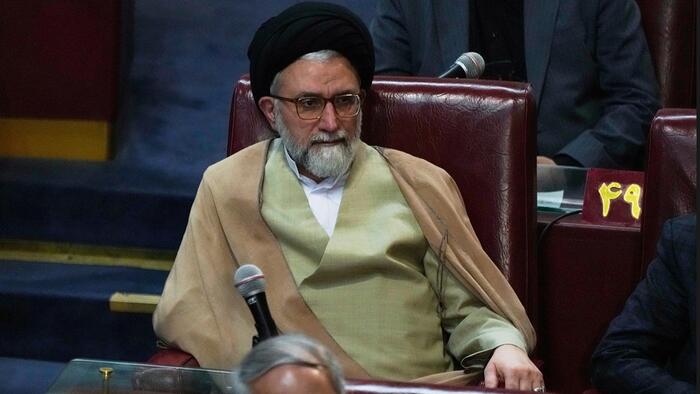
Israel says Iran’s intelligence chief Esmail Khatib was eliminated overnight as pace of top leadership killings accelerates.
-
Israeli attack on Iran’s major South Pars gas field could trigger retaliation on Saudi oil fields.
-
President Trump issues posts musing whether US should ‘finish off’ Iran, though Tehran signals continuity & stability of govt.
-
Iran FM says no change in nuclear posture: vows Tehran not pursuing an atomic bomb.
* * *
Iran Intel Chief Killed In 3rd High-Level Hit
More decimation of Iranian top leadership, as Israel’s defense minister Israel Katz has announced Iran’s intelligence chief Esmail Khatib was eliminated in an overnight strike, which marks yet another alleged high-level hit as the tempo of targeted killings accelerates. “On this day, significant surprises are expected across all arenas that will escalate the war we are conducting against Iran and Hezbollah in Lebanon,” Katz warned in a military briefing, according to Israeli media.
If confirmed, the reported hit would mark the third top-tier Iranian figure eliminated in just 48 hours, following Israeli strikes that reportedly killed national security chief Ali Larijani, who was likely effectively running the war, and Basij commander Gholamreza Soleimani.
Trump Posts: Finish Them
President Donald Trump posts Wednesday: I wonder what would happen if we “finished off” what’s left of the Iranian Terror State, and let the Countries that use it, we don’t, be responsible for the so called “Straight?” That would get some of our non-responsive “Allies” in gear, and fast!
Trump also said in a rapid follow-up that “We are rapidly putting them out of business!”
Still, Iran is signaling continuity, not collapse, even as newspapers in America run celebratory headlines such as “Israel Is Hunting Down Iranian Regime Members in Their Hideouts, One by One.” Foreign Minister Abbas Araghchi pushed back on the narrative of systemic breakdown, insisting the Islamic Republic “does not rely on a single individual.”
Meanwhile, unconfirmed chatter suggests parliament speaker Mohammad Bagher Ghalibaf may have narrowly survived an assassination attempt in northern Tehran. There are indicators that he too may be running the day-to-day of the government and of the wartime response; however, it’s also clear the Islamic Revolutionary Guard Corps (IRGC) is firmly in control of the country.
Israel Gives Military Freedom Of Elimination Strikes
As a reminder of analysis we featured earlier in the conflict, “Endurance regimes do not need clean victory to change the game. They only need to survive the shock while making the old equilibrium too costly for their adversaries to restore.” Journalist Jeremy Scahill, who starting over two decades ago covered the lead-up to the Iraq war from on the ground in Baghdad, has reiterated that “In asymmetric warfare, the less powerful side does not need to militarily defeat an adversary, but rather force it to a point where it determines the costs of continuing the war is too high.”
The US-Israeli operation is seeking to so utterly smash the country and its leadership, and potentially bring people out to the streets to topple the government, so as to avid reaching this dilemma. Israel is said to be working with spies and spotters on the ground, which Basij forces have sought to expose and arrest.
Iran’s Foreign Minister Abbas Araghchi on the killing of Ali Larijani:
I do not know why the Americans and the Israelis still have not understood this point.
The Islamic Republic of Iran has a strong political structure with established political, economic, and social… pic.twitter.com/v6cgyjaoU3
— Clash Report (@clashreport) March 18, 2026
But just as Iran is clearly trying to adapt, by reportedly allowing autonomy of command among military units in the instance of being cut off from top leadership, so is Israeli too adapting its strategy and tactics. Katz has confirmed that he and Prime Minister Benjamin Netanyahu have granted the military standing authorization to eliminate additional senior Iranian officials, with no case-by-case approval required. Or in other words, the Israeli decapitation efforts are now on autopilot, signaling greater escalation.
More Patriots in Turkey After Third Iran Missile Flyover
Escalation isn’t just contained to the US-led Operation Epic Fury inside Iran. In Turkey, NATO is reinforcing its posture, deploying another US Patriot battery to Adana alongside existing systems – soon on the heels of the alliance reportedly having intercepted a third Iranian ballistic missile that briefly entered Turkish airspace this week.
Meanwhile, Iran’s own retaliatory footprint is widening, as it vows “revenge” for the killing of Ayatollah Ali Khamenei and other top leaders. A strike near the Al Minhad base in the UAE, which hosts Australian troops, sparked a fire that damaged facilities, Prime Minister Anthony Albanese has confirmed while saying that thankfully though no personnel were injured.
Dubai, long marketed as the region’s stable and quiet “safe haven” – continues to witness nightly sounds of air defense fire. The UAE confirmed its systems intercepted a barrage of threats, with fighter jets also scrambling in response to the threat overnight.
Tehran Signals No Change in Nuclear Posture
Tehran, for its part, is surprisingly signaling that it has no intention of developing a nuclear weapon. It’s hard to evaluate any such official stance in the middle of a war for survival, but FM Araghchi on Wednesday reiterated that Iran’s nuclear posture “won’t significantly change” – even as military leaders warn of a “decisive and regrettable” response to Israeli strikes.
Tehran holds funeral ceremony for security chief Ali Larijani and Basij chief Gholamreza Soleimani. pic.twitter.com/4sjTyzzJgj
— Ihtisham Ul Haq (@iihtishamm) March 18, 2026
Nuclear sites have come under direct threat during the war, with Tuesday a projectile reportedly having near Iran’s Bushehr nuclear facility, though local officials say no damage occurred.
In Washington, there’s some clear doubling down militarily on the part of the Trump administration, while the question of finding an offramp is still likely being hotly debated within White House and national security circles. On the political front, the closer the US gets to Memorial Day travel with gas prices climbing higher, the more politically costly it is likely to be for Republicans.
South Pars Gas Field, Hormuz, Israel
The International Maritime Organization is scrambling to convene an emergency session on establishing a “safe maritime corridor” as ships and crews remain essentially trapped in the Persian Gulf. Crucially, Bloomberg is reporting that the attack on South Pars gas field appears to be from Israel and that Iran has vowed it would retaliated against regional energy infrastructure if attacked in such a way. Oil facilities have also reportedly been struck.
Axios’ Barak Ravid has cited a senior Israeli official to report Wednesday: “The Israeli Air Force struck the largest natural gas processing facility in Iran, located in the southwest of the country. The strike was carried out in coordination with and with the approval of the U.S.“
⚡️Earlier this morning, Israeli warplanes demolished a building in Al-Bashoura in Beirut pic.twitter.com/Y7zhlZNTho
— War Monitor (@WarMonitors) March 18, 2026
Iranian missiles killed civilians overnight near Tel Aviv, and Israeli rail lines were disrupted along with a pause in many civic and public services, as people seek shelters. “An elderly couple, identified as Yaron and Ilana Moshe, were killed early Wednesday morning in Ramat Gan by a cluster missile as Iran continued to fire salvoes at Israel through the night and into the morning,” Times of Israel reports. “From midnight to 8 a.m., there were four rounds of missile fire that caused injuries and damage to property.”
⚡️Holon, Tel Aviv pic.twitter.com/HSkN9PigTA
— War Monitor (@WarMonitors) March 18, 2026
Lebanon and Beirut are once again under fire as Israel expands strikes against Hezbollah positions in the southern part of Lebanese capital – with whole central buildings on fire and in some instances collapsing. A ground war has also been once again opening in southern Lebanon.
Read the full article here