

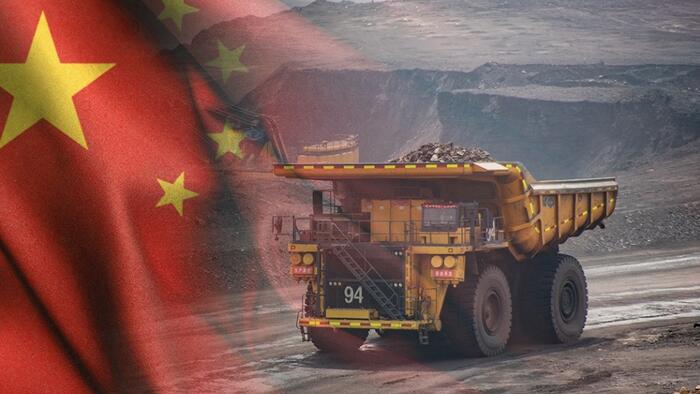
During an October swing through Southeast Asia, US President Donald Trump struck same-day agreements with Malaysia and Thailand to deepen cooperation on critical minerals and rare earths, underscoring Washington’s push to diversify supply chains away from China, according to SCMP.
According to the White House, Trump and Malaysian Prime Minister Anwar Ibrahim agreed to expand collaboration on building and securing critical mineral and rare earth supply chains. Using similar language, Washington said it would also “strengthen cooperation [with Thailand] on critical minerals supply chains development and expansion,” including exploration, extraction and processing.
The back-to-back deals reflect how resource-rich economies have become central battlegrounds in the US-China rivalry over rare earths. Analysts say Beijing currently holds the advantage, having spent decades engaging countries across Southeast Asia, Africa and Latin America. These nations often view China as a “partner that actually builds,” with investment that comes with fewer political conditions than US funding.
China’s dominance is structural. It mines about 70 per cent of the world’s rare earths and controls roughly 90 per cent of global processing capacity, meaning even minerals extracted elsewhere are often sent to China for refinement. As Marina Zhang of the University of Technology Sydney noted, this long-term engagement has given Beijing a “commanding lead,” particularly in downstream processing.
Enrique Dans of IE Business School said China already controls the “chokepoints that matter,” from separation to magnet manufacturing, allowing it to “lock in long-term offtakes and joint ventures in resource-rich countries.” He contrasted that with a US approach that “tends to arrive with conditions, compliance, and slower money,” adding that many governments see Beijing as the partner that delivers visible projects and jobs quickly.
Sun Chenghao of Tsinghua University said China’s model — combining infrastructure, trade and mineral cooperation — has given it a more positive image in the Global South, while the US is increasingly seen as “aggressive.” Although Washington retains influence, he said “China still holds a relative advantage in the rare earth sector,” especially in emerging resource-rich economies.
SCMP writes that the rivalry is intensifying. Rare earths now sit at the centre of a strategic contest that both powers see as vital to economic security, defence manufacturing and technological leadership — with Southeast Asia, Africa and Latin America likely to remain key theatres in the years ahead.
Loading recommendations…
Read the full article here