

Developing story. Check back for updates.
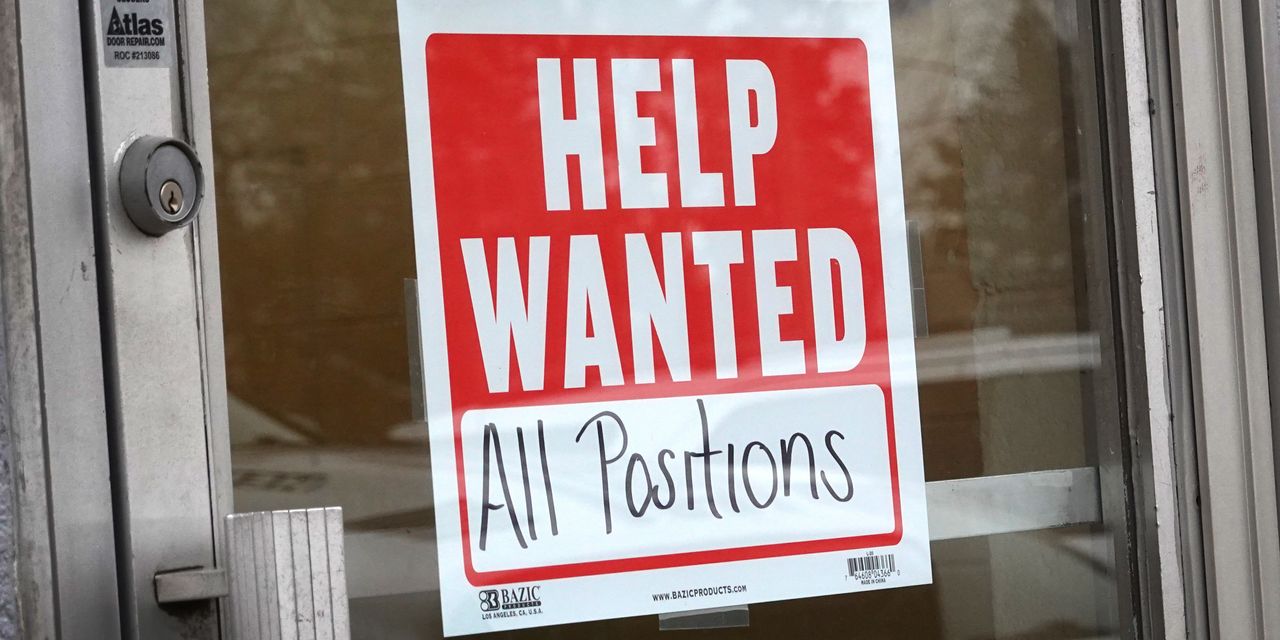
The numbers: Job openings in the U.S. rose slightly in September to 9.6 million, indicating that a still-growing economy still has plenty of demand for labor.
Job listings edged up from a revised 9.5 million in August, the Labor Department said Wednesday.
The number of job openings is seen as a sign of the health of the labor market and the broader economy. Economists polled by the Wall Street Journal had forecast job listings to total 9.4 million.
While job postings are still high, they have subsided from a record 12 million in 2022.
Senior Federal Reserve officials want to see openings fall even further to loosen up the labor market and ease the upward pressure on wages. Rapidly rising wage could make it harder to get inflation under control.
The number of people quitting jobs, meanwhile, was unchanged at 3.6 million.
Job quitters had climbed to as high as 4.5 million last year before ebbing. People quit less often and tend to stay put when the economy softens and jobs become harder to find.
Key details: Job openings rose at hotels, restaurants, arts, entertainment and recreation — industries that tend to benefit when the economy is strong and Americans have money to spend.
Employment fell in the federal government and information-related services such as media.
While many openings are never actually filled, economists view the trend in job postings as a rough gauge of how strong the labor market is.
The number of job openings for each unemployed worker was unchanged at 1.5 in September.
The ratio is down from a peak of 2% in 2022, but the Fed wants to see it fall back to pre-pandemic norms of around 1.2 or so.
The so-called quits rate among private-sector workers, meanwhile, was unchanged at 2.6% and back to pre-pandemic levels.
The U.S. is forecast to add a 170,000 new jobs in October. The jobs report comes out on Friday.
Big picture: Not as many businesses are hiring, and they are not hiring as many people as they were a year ago, but the labor market is still quite sturdy. People with jobs spend and keep the economy growing.
Yet if labor remains hard to find and wages rise too fast, a so-called wage-price spiral could emerge that leads to persistently high inflation. That could pose a threat to the ongoing expansion if the Fed is forced to raise interest rates even higher.
Looking ahead: “U.S. job openings increased further after last month’s surprise surge — yet another data point underscoring the resilience and strength of the US labor market,” economist Ali Jaffery of CIBC Economics said in a note to clients.
“Ultimately, we expect the Fed will need to make monetary policy more restrictive at its December meeting in response this accumulation of evidence of strengthening demand.”
Market reaction: The Dow Jones Industrial Average
DJIA
and S&P 500
SPX
rose in Wednesday trades.
Read the full article here