

Published on
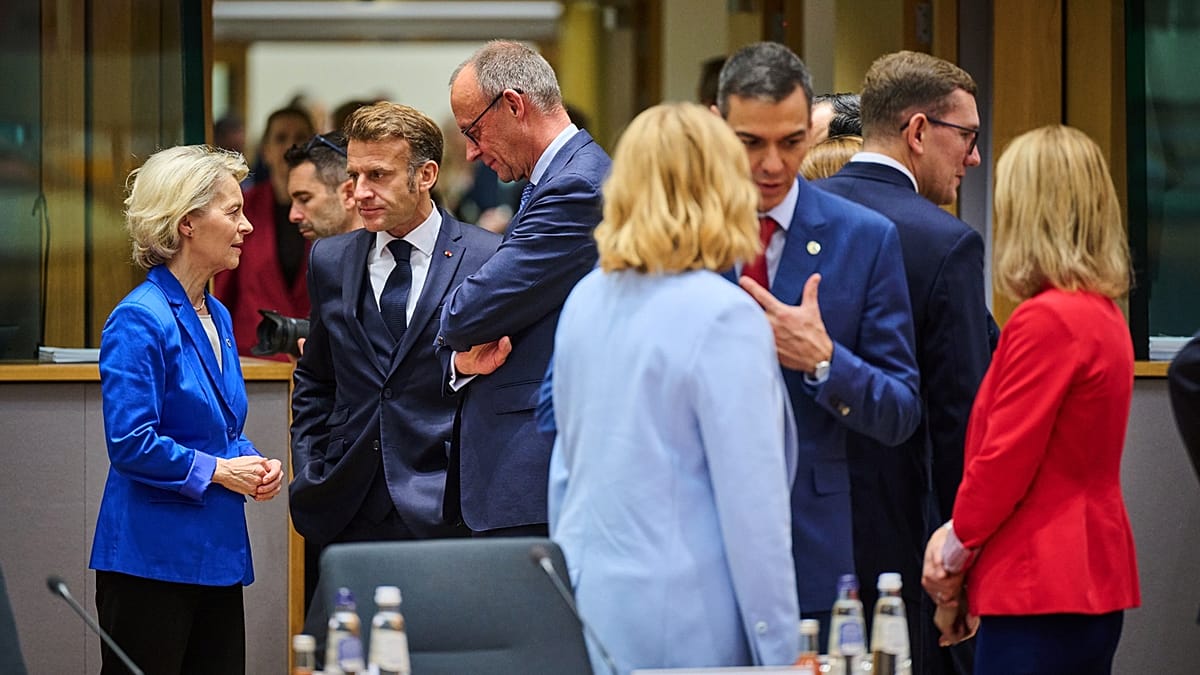
The 27 leaders of the European Union are gathering in Brussels to make a decision that could redefine the continent’s security architecture: how to raise at least €90 billion to meet Ukraine’s financial and military needs for 2026 and 2027.
With the United States pushing for a fast deal between Ukraine and Russia, diplomats and officials are framing today’s summit as a make-or-break moment for Europeans to maximise their collective leverage and prove they still have skin in the game.
“This is not just about numbers,” European Commission President Ursula von der Leyen said ahead of the summit. “This is also about strengthening Ukraine’s ability to secure a real peace – one that is just, one that is lasting, one that protects Ukraine and thus also protects Europe.”
There are two main options on the table to reach the €90 billion figure. The first is a groundbreaking proposal to channel the immobilised assets of the Russian Central Bank into a zero-interest reparations loan to Ukraine, which the country would only be asked to repay after Moscow compensates for the damage done by its invasion – something extremely unlikely to happen.
The second is common borrowing on the financial markets, as the Commission did on behalf of all member states during the COVID-19 pandemic.
Both options come with formidable pros and cons that weigh heavily on leaders’ minds. But there’s a key difference: whereas joint debt would require unanimity to change the EU budget rules – a nearly impossible scenario due to Hungary’s uncompromising opposition – the reparations loan could be approved with just a qualified majority.
The arithmetic has thrust Belgium into the spotlight. The country holds €185 billion in Russian assets, and fears it would fall victim to Moscow’s no-holds-barred retaliation should the reparations loan go ahead. Belgian Prime Minister Bart De Wever has blasted the proposal as “fundamentally wrong” and riddled with “multifold dangers”.
Thursday’s summit will therefore see leaders attempt to assuage De Wever’s numerous concerns and secure Belgium’s participation in the bold scheme. In recent days, Italy, Bulgaria, Malta and the Czech Republic have voiced reservations about the reparations loan, while Euroclear, the depository that keeps the €185 billion, has also been critical.
Rough terrain ahead
The negotiations will be lengthy, arduous and potentially explosive. Among other things, Belgium has demanded open-ended guarantees to protect itself against any pitfall. By contrast, the other member states want to settle on a fixed figure.
“We want all risks covered and mutualised without limitation, in full and from day one,” said a senior diplomat, speaking on condition of anonymity. “The risks we face have no cap, so we cannot agree to a guarantee that does have a cap.”
António Costa, the president of the European Council, has promised Belgium would not be overruled. “This is not a fight between Europe and Belgium,” he said.
If leaders succeed in convincing De Wever, a path will open for the reparations loan to become a reality. If leaders fail, they will discuss joint debt under the shadow of Hungary’s veto. If the two options prove intractable, the Commission will have to quickly design an interim solution to ensure assistance to Ukraine remains uninterrupted.
“The meeting will last as long as it’s needed,” an EU official said, suggesting the debate could stretch over Friday and even beyond.
The clock is ticking fast: Kyiv needs a fresh injection of foreign aid as early as April. After the last inconclusive summit, the bloc can ill afford another debacle. With Washington and Moscow looking closely at Brussels, officials concede that failure is not an option.
Follow our live blog for updates.

${title}
${body}
Reparations loan for Ukraine: Who’s in favour and who’s against?
As we wait for EU leaders to make their way into the summit, we want to get you up to speed on the main issue: the reparations loan.
Under the scheme, the financial institutions that hold the immobilised assets of the Russian Central Bank would transfer their cash balances to the Commission, which would then issue a zero-interest loan to Ukraine. Kyiv would be asked to repay only after Moscow ends its war and compensates for the damage its invasion has wrought. Moscow would then be able to recover its money, completing the cycle.
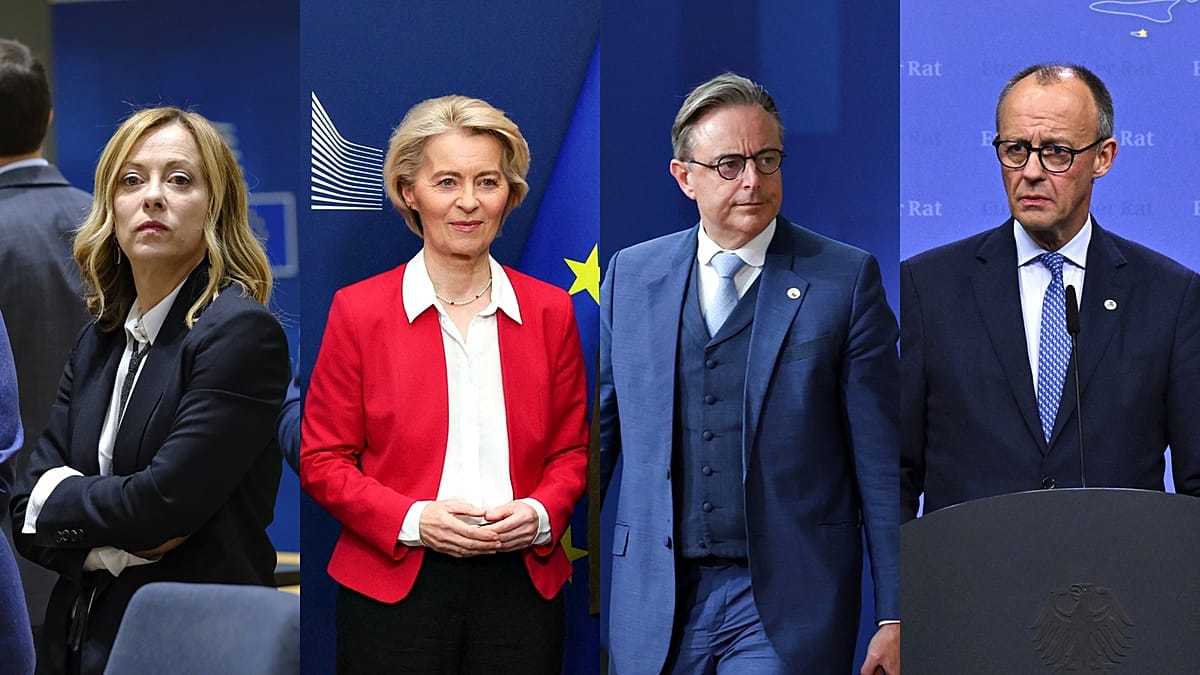
While the proposal has been met with public enthusiasm by some leaders, like Germany’s Friedrich Merz and Denmark’s Mette Frederiksen, it faces staunch opposition from others, such as Belgium’s Bart De Wever and Hungary’s Viktor Orbán.
We break down who’s in favour and who’s against.
Reparations loan for Ukraine: Who’s in favour and who’s against?
The European Union’s bold attempt to issue a reparations loan to Ukraine using immobilised Russian assets has sharply divided the bloc’s key leaders. Ahead of…
Read the full article here