

Authored by Janice Hisle via The Epoch Times (emphasis ours),
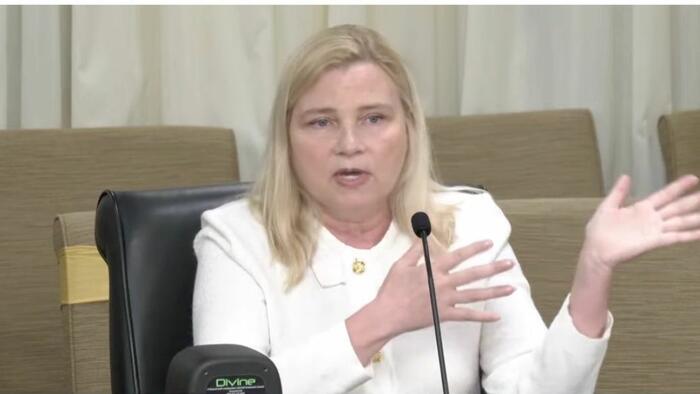
Seven years after Faye Bernstein first blew the whistle on waste, fraud, and abuse concerns, “nothing is changing” at the Minnesota Department of Human Services, she told lawmakers during an April 7 hearing at the state Capitol in St. Paul.
As a 20-year employee who still works for the department while facing alleged demotion and retaliation over her complaints, “I still see a reckless disregard for compliance,” she told the state’s Fraud Prevention and State Agency Oversight Policy Committee.
Bernstein, a former compliance officer at the agency that faces heightened national scrutiny over massive fraud scandals, gave an example supporting her opinion. She said she learned that, about a year ago, “someone had falsified the audit tracker,” an important internal record that helps workers ensure they remedy problems identified in audits.
“When I heard that, I thought, ‘My gosh, somebody’s getting fired for that!’” Bernstein said; instead, managers excused the falsification, indicating “that person had simply made a mistake, that maybe she didn’t understand instructions,” she said.
“The lackadaisical attitude we have about even keeping track of our findings will partially explain” why some of those same findings recurred in an audit released in January, she said. The audit noted some of the same issues that Bernstein reported in 2019.
After Bernstein’s testimony, the agency’s commissioner, Shireen Gandhi, testified. She pledged to “build a culture of compliance,” and to ensure that all staff members understand their roles and “have the knowledge, skills, and authority to fulfill those responsibilities.”
State Rep. Isaac Schultz, a Republican who serves on the anti-fraud committee, told Gandhi: “I hope that more people [like Bernstein] continue to shine light on what’s going on inside of your department, because I have a really hard time trusting what leadership is saying to us.”
Another committee member, Democratic state Rep. Steve Elkins, gave Gandhi credit for owning up to problems that the audit revealed.
Having been elected in 2018, Elkins has read quite a few audits. Each one includes a response from the agency that was audited. Typically, “that letter is deflecting, denying, minimizing,” he said.
“This is the first time … where the head of the agency stepped up and said almost everything in the report was accurate, and this is what we’re going to do about it, and this is when we’re going to have it done, and this is the person who’s responsible for getting it done,” Elkins said. “And I think that that’s a remarkable turnaround.”
Lawmaker Urges: ‘Draw a Line in the Sand’
Minnesota’s government-program fraud dating to 2018 could reach $9 billion or more, prosecutors have said. Fraud concerns have expanded nationwide; the national leader may turn out to be California, where scammers may have bilked taxpayers out of “hundreds of billions” of dollars, a federal prosecutor said.
Many of Minnesota’s still-emerging fraud scandals involve programs that are now under Gandhi’s purview. She has worked for the agency since 2017 and has headed it since last year; Gov. Tim Walz made her temporary appointment permanent earlier this year.
State Rep. Kristin Robbins, a Republican who chairs the fraud-prevention committee, told Gandhi: “The most important thing is to make sure we’re being good stewards of taxpayer money.”
“As Ms. Bernstein said, we’ve been talking about this for years … so we have to draw a line in the sand and say: ‘We are not going to allow this to continue anymore,’” Robbins said.
Robbins and other committee members repeatedly asked Gandhi about holding people accountable when procedures aren’t followed or when records are falsified; the latest audit revealed that employees created new records—and backdated them—in the midst of the auditors’ probe.
“I was shocked to hear this information,” Gandhi told the committee, calling any such fabrications “absolutely unacceptable.” However, Gandhi said state law prohibits her from revealing details of the internal investigation into the falsified records.
When Robbins inquired further, Gandhi said information was presented to state authorities for possible criminal charges. The agency is also putting together internal processes “for preventing and catching this sort of issue going forward,” Gandhi said.
No-Bid Contracts Awarded, Procedures Not Followed
In mid-2025, lawmakers approved a two-year budget of $17 billion for Gandhi’s agency, accounting for 40 percent of the state’s total budget, state legislative records show.
One branch of the department, the Behavioral Health Administration, distributed more than $2 billion in grants from July 2022 to December 2024. The money goes to businesses and organizations that provide mental-health or substance-abuse services.
However, during that 29-month span, the state agency “did not comply with most requirements we tested,” Valentina Stone, an audit director for the Office of Legislative Auditor, testified to the fraud committee.
Auditors found 13 problems that need to be fixed to safeguard taxpayers’ money, including four recurrent issues, Stone said.
During the study period, the agency handled 830 unique grant agreements. Auditors combed several batches of those grants, looking for compliance with different “internal controls”—rules and procedures to ensure proper use and tracking of money.
Among 24 grants examined for compliance with competitive-bidding rules, auditors found the agency had inappropriately awarded more than half of them. The agency doled out five grants totaling $4.7 million without seeking competitive bids first or giving a reason for skipping that process.
Other tests revealed more internal-controls violations. The agency paid grantees even before grant agreements were signed, failed to visit providers to ensure they were complying with agreements to render services, and awarded new grants to past providers without reviewing how those providers performed.
“It concerns me greatly … that money is still going out the door in real time to some of these same grantees when these processes haven’t been tightened up,” Robbins said.
In March, a separate audit of Human Services’ fraud-ridden autism-treatment reimbursement program found that the agency mistakenly believed that it lacked authority to probe allegations of kickbacks without evidence of another alleged offense. The problem appears to have stemmed from a decades-old definition of “fraud” that failed to explicitly list kickbacks, which are illegal payments to people who cooperate with scammers.
* * *
Read the full article here