

A newly filed patent suggests Tesla may be preparing to embed Starlink dishes directly into vehicle roofs, bringing connectivity costs in-house under Starlink rather than continuing to pay third-party carriers like AT&T. Such a move would unlock space-based, high-speed internet for vehicles. Notably, some Tesla owners are already mounting Starlink Mini dishes onto their vehicles, offering an early glimpse of next-generation connectivity.
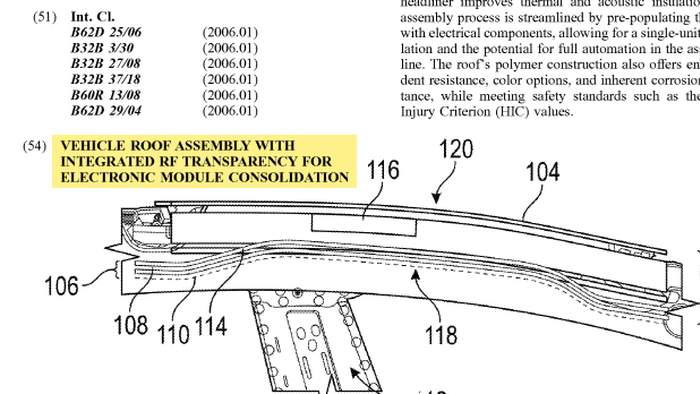
Tesla filed a patent covering a vehicle roof assembly that is transparent to radio frequencies, specifically noting that it allows for satellite communications to pass through.
“In some examples, this assembly enables the integration of overhead electrical modules and components, including antennae, directly into the roof structure, facilitating clear communication with external devices and satellites,” the patent explained in the abstract section.
Here is a drawing from the patent…
Starlink was not mentioned, but it is important to note that Tesla pays for cellular network access to provide basic connectivity supporting essential functions such as navigation and software updates. Users then pay a monthly fee for “Premium Connectivity” to unlock features like live traffic visualization, satellite maps, and streaming media over cellular networks.
We have already seen some Tesla drivers purchase suction cup mounts for Starlink Mini dishes and attach them to the glass moonroof. The purpose is to provide a high-speed connection to the vehicle and its occupants, especially in areas with low coverage or dead zones.
Here’s EV blog Electrek’s first take on the new patent:
I think it’ll be about cost. Right now if you have premium connectivity, Tesla pays whatever cellular network for that. If they can bring it totally in “house” then that means Musk pays himself for internet and not AT&T or some other carrier. It might not be much cost savings but every penny counts for those reoccurring fees on the bottom line.
Furthermore, Starlink registered “Starlink Mobile” earlier this month…
Loading recommendations…
Read the full article here