

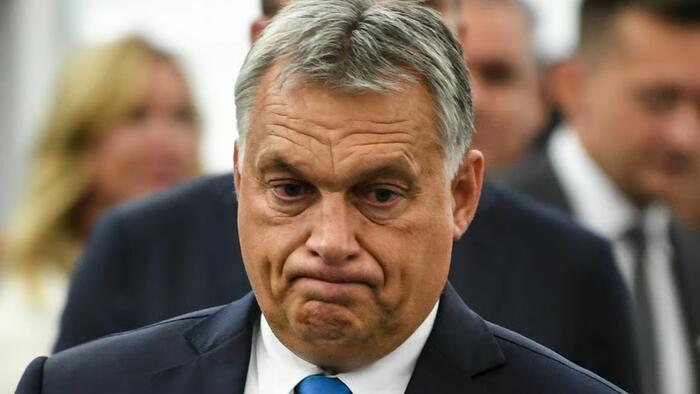
In a stunning collapse that ends 16 years of uninterrupted rule, Hungarian Prime Minister Viktor Orbán has conceded defeat in Sunday’s parliamentary elections, according to statements from opposition leader Péter Magyar.
With early results showing the Tisza Party on track for 128 seats in the 199-seat National Assembly and Fidesz collapsing to just 62 seats (based on more than 21% of votes counted), Orbán’s long-dominant alliance has suffered a decisive repudiation. Four years after securing a supermajority of 135 seats, Fidesz is projected to fall well short of even a simple majority.
Hungary Election Update (21:12 CET)
Official NVI count (21.54% processed):
🔹 Tisza (Magyar): 56.4% (128 seats)
🔸 Fidesz (Orbán): 37.8% (62 seats)
📈 Turnout: Record 77.8%Magyar holding a steady lead as counting continues. 🇭🇺 #HungaryElection #Magyar #Orbán
— Mandolin Rain (@Mandolin__Rain) April 12, 2026
The concession, delivered as vote tallies continued to roll in with record 77.8% turnout, marks the first time in the post-communist era that Orbán’s Fidesz has lost control of parliament. It validates the dire warning Orbán himself issued just days ago in his final campaign rally: “We could now lose everything.”
Péter Magyar, the 43-year-old former Fidesz insider who rocketed Tisza from fringe movement to projected governing force in under two years, hailed the moment as a turning point for Hungary.
“Today the Hungarian people have chosen change,” Magyar told supporters in Budapest. “Orbán has conceded. A new era begins.”
The scale of the upset is seismic. Tisza appears headed not only for a simple majority (requiring 100 seats) but potentially the two-thirds supermajority (133 seats) needed to rewrite cardinal laws and amend the constitution — the very tools Orbán used to entrench his “illiberal democracy” model.
What the Numbers Mean
- Tisza: ~128 seats (and climbing as more precincts report)
- Fidesz: ~62 seats
- Previous election (2022): Fidesz 135 seats
Urban centers, younger voters, and economically frustrated middle-class families drove the surge, while Fidesz held rural strongholds. The opposition’s consolidation under Magyar — a center-right, pro-EU, anti-corruption platform — proved decisive after years of fragmented resistance.
Immediate Geopolitical Shockwaves
The result upends the European political landscape:
- Brussels truce: Frozen EU funds (over €20 billion) are now expected to flow again. Hungary’s systematic vetoes on Ukraine aid, migration policy, and rule-of-law mechanisms are likely to end.
- Ukraine/Russia pivot: Orbán’s pro-peace, Russia-friendly stance – including delays on sanctions and energy deals – will almost certainly be reversed.
- Populist right in freefall: The defeat delivers a body blow to Europe’s nationalist movements. Marine Le Pen, Matteo Salvini, and Germany’s AfD lose their strongest Central European anchor. Donald Trump’s recent endorsement of Orbán as a “strong leader” and JD Vance’s pre-election Budapest visit now look like backing the wrong horse.
- Markets react: Early trading signals suggest a stronger forint and narrowing sovereign spreads as investors price in EU reconciliation and policy normalization.
Orbán, 62, has not yet issued a personal statement, but sources close to Fidesz say he will address the nation later today. The party retains pockets of deep loyalty, particularly among older voters and in the countryside, but the scale of the urban and youth revolt proved overwhelming.
Official final results are still days away (including overseas and mail-in ballots), but with Orbán’s concession the political reality is already set: Hungary’s voters have delivered a verdict that will reverberate across Europe and the global populist movement for years.
This is a breaking story. ZeroHedge will update as Orbán speaks and final tallies come in.
Read the full article here