

By Molly Schwartz, cross-asset macro strategist at Rabobank
My Circus! My Monkeys!
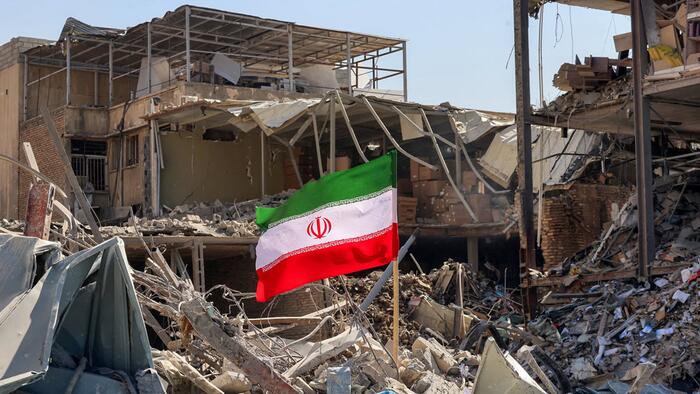
Europe was hit with the first strike to its energy supply chain after the Russian invasion of Ukraine and had to start diversifying its inflows from elsewhere. Now that Middle Eastern LNG is losing reliability, Europe might have to get involved just to keep the lights on.
While the EU and UK would probably be more than happy to spectate from the proverbial “monitoring chair,” they may not have a choice. TTF prices reached highs of – €48.95/MWh yesterday—the highest since February of 2025- and are up more than 20% today.
QatarEnergy announced that it has ceased production of LNG and associated products due to the recent escalation. Our Energy Strategists, Florence Schmit and Joe DeLaura, note that we could see prices return to 2022 levels should Qatar be taken out of the LNG equation entirely (easily back to €100/MWh). Read more here.
This puts the entire European energy complex at risk and might be just the incentive needed for Europe to get out of the monitoring chair and into the ring.
France24 reports that “France, Germany, UK ready to take ‘defensive action’ against Iran.” As the EU touts commitments to increase defense spending and build up its military capabilities, Rabobank Global Strategist Michael Every has mused, “why have all these war planes sitting on the tarmac not doing anything?”
A little farther south, the Gulf Cooperation Council (GCC) is considering its own involvement. Omani foreign minister Badr Albusaidi said on X that “neither the interests of the United States nor the cause of global peace are well served by this. I urge the United States not to get sucked in further. This is not your war.” But the GCC has made it clear that they don’t want it to be their war either. Threats to the economies of the Gulf are not just about energy—this also impacts their budding tourism and hospitality industries as few want to vacation in an active warzone. The UAE and Qatar have reportedly been lobbying allies to end this war as soon as possible.
Meanwhile, in a statement, the Saudi Ministry of Foreign Affairs affirmed “its full solidarity with and unwavering support for the brotherly countries, and its readiness to place all its capabilities at their disposal in support of any measures they may undertake. It also warns of the grave consequence resulting from the continued violation of states’ sovereignty and the principles of international law.” As much as the GCC may want to stay out of it (or, at least as far out of it as they can when their territory is being striked by Iranian drones), the Saudis, at least, are prepared to escalate further.
Trump and Hegseth have not shown any signs of backing down just yet. Early yesterday morning, Hegseth affirmed that “Iran is not a regime change war, but the regime did change,” and that the war will be finished “on America-first conditions.” What those conditions are is still TBD. And the ambiguity of those conditions still leaves us with the question of what constitutes a win.
Hegseth and Rubio would tell you that the aim is the same as last time—to set back Iran’s nuclear proliferation program. But as we saw recently, it doesn’t take Iran very long before they can start to rebuild capacity. The best way to cut off nuclear proliferation is to cut off the head, and that necessitates regime change.
However, as noted in yesterday’s installment, regime change will not be easy. The goal of Tehran is to survive by any means necessary. Even if the regime is rendered a shell of what it once was, but manages to hang on by a thread, then the US has failed. While Trump has announced that this military operation could take weeks and Hegseth rejected the idea that this would be another endless war to echo Iraq and Afghanistan, this may still be a much longer ride than expected.
Yesterday’s stellar performance of USD also exemplified how calls of “Sell America” in recent months were shortsighted. While USD has not been behaving as a safe-haven traditionally would, given the dramatic USD sell-off in H1 2025, we have long argued that this was more about positioning—a repricing of EUR/USD in the aftermath of European announcement of defense spending, and rising USD hedge ratios from foreign investors—than it was a loss of USD’s safe haven status. Indeed, recent price action makes it clear that when the going gets rough, investors still flee to the warm embrace of greenback liquidity.
Still, other US assets have not felt the love. The inflationary risks posed by an extensive war with Iran are at front of mind for investors, especially as analysts keep a watchful eye on the strait of Hormuz. Even though the Fed prefers to look at core inflation, which strips out direct energy costs, energy is an input into everything, including core goods and services. While inflation is already above the 2% target, and the lagged effects of tariffs are starting to put pressure on core goods, the additional price increases posed by turning the major oil exporter of the world into a warzone may put the Fed in a tricky position. US 2 year and 10 year Treasury yields moved in parallel, closing the day up 11bp, which is the greatest single day move since the US-Iranian skirmish last June.
Loading recommendations…
Read the full article here