

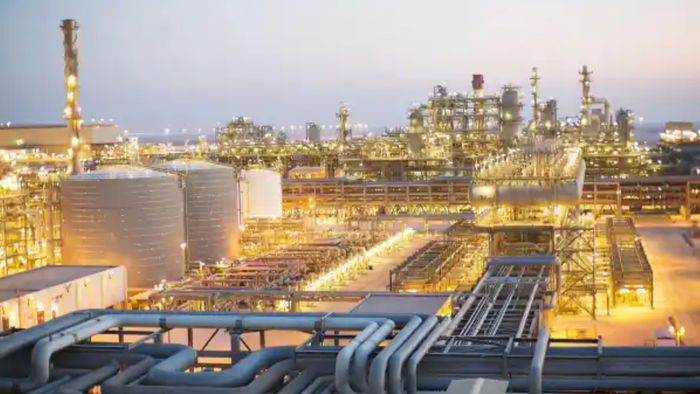
The two-week U.S.-Iran ceasefire looks more like a pause in the six-week conflict than a long-lasting agreement, with language so broad and vague that it remains unclear who conceded what. The one clear point is that Iran’s reported willingness to allow vessel transits through the Strait of Hormuz was enough to send crude prices tumbling from triple-digit territory and spark a global relief rally across equities and bonds.
Everyone is breathing a sigh of relief on Wednesday morning, and traders are already identifying the companies best positioned to reap massive rewards from rebuilding damaged oil and gas infrastructure across the Gulf.
Shares of Chiyoda Corporation in Tokyo jumped 15.5% as traders assessed that the developer and builder of large-scale industrial infrastructure might be one of the major players in rebuilding damaged Gulf energy assets.
Chiyoda is a project developer and builder of industrial infrastructure, including:
-
LNG and natural gas processing plants, one of its flagship niches
-
Oil refining and petrochemical facilities
-
Energy infrastructure and environmental systems
“Fundamentally, if the Strait of Hormuz is reopened, the next step is reconstruction demand for petrochemical plants, desalination plants, and other facilities,” Kazuhiro Sasaki, head of research at Phillip Securities, wrote in a note.
On Tuesday, International Energy Agency Executive Director Fatih Birol told French newspaper Le Figaro that more than 75 energy sites across the Gulf region have been attacked, with about a third severely damaged, suggesting tens of billions of dollars in repairs.
Neil Newman, head of strategy at Astris Advisory Japan, wrote in a note, “It is relatively straightforward to identify the countries where reconstruction will be needed, determine the types of projects required, and match these directly to relevant Japanese companies.”
A Chiyoda spokesperson was quoted by Bloomberg as saying, “Based on the situation so far, we are considering the resumption of on-site work for the LNG project in Qatar.”
One of the most notably damaged energy assets in the Gulf region was Qatar’s Ras Laffan LNG facility, where repairs could take up to five years and cost billions of dollars. Bloomberg noted that Chiyoda receives about 46% of its revenue from Qatar.
Read the full article here