

By Bas van Geffen, Senior Macro Strategist at Rabobank
Happy New Year! Brace yourselves, we’re in for a rough ride.
In our last Monthly Outlook for 2025, we looked ahead to this year. We warned that it would be foolish to assume that this year would be any calmer. President Trump wasted no time to make that prediction accurate.
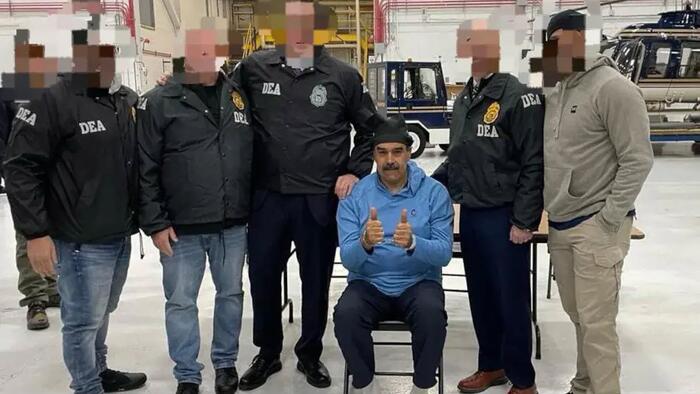
You will undoubtedly have seen the headlines. This weekend, President Trump launched a military operation in Venezuela and in a matter of hours, Venezuelan President Maduro was in US custody. He faces charges for “pushing drugs into the United States.”
It is the first time the US moves to oust a Latin American leader since Bush moved against Noriega in 1989. Coincidentally, the Panamanian leader was also wanted for drug trafficking, but the US had other geopolitical reasons to dethrone him. Drug trafficking charges may be Trump’s official reason for this weekend’s operation in Venezuela, as his voter base did not elect him on a platform of active foreign policy. Still, the move fits with a modern-day Monroe Doctrine.
Throughout 2025, Trump had already taken an interest in politics in other Latin American countries. He has been a supporter of Argentina’s Milei, who largely shares Trump’s ideas. And Trump has not shied away from punitive tariffs on Brazil, as retribution for a criminal investigation against former president and Trump-ally Bolsonaro and arguably Brazil’s deepening ties with Russia and China.
Is this a warning of more to come? Recall that last year, Trump threatened to take control of the Panama Canal and he said “something could happen with Greenland.” This weekend, the US president repeated that the country “needs Greenland from the standpoint of national security.” And, Trump warned that Colombia could be next after Venezuela. He accused the Colombian president of making and selling drugs to the United States, adding that “he’s not going to be doing it very long, let me tell you.”
Unsurprisingly, several Latin American leaders condemned the move. Brazil’s Lula said that an unacceptable line had been crossed, just as relations between the two presidents had started to defrost. Mexico strongly rejected the attack, and Chile and Colombia expressed their concerns.
The capture of Maduro also puts another strain on US relations with Russia and China, who both supported Venezuela. In fact, Maduro had met with Chinese envoys just hours before his capture.
Meanwhile, the response of US allies was divided as leaders weigh politics and international law. French President Macron chose the political route of commending Trump’s achievement: “Venezuelan people are rid of Maduro’s dictatorship and can only rejoice.” His German counterpart noted that the legal assessment is “complex.” But, above all, Merz called for a transition to a government that is legitimised by elections, warning against political instability.
Opinions vary how Venezuela may get there. Macron suggested that Maduro’s main political opponent –and presumed winner of the previous elections– could lead this transition: “President Edmundo González Urrutia, elected in 2024, can swiftly ensure this transition.” Venezuelan opposition leaders have called for the same.
But President Trump has other plans. According to the US president, the opposition leaders lack the “respect” of the country to govern effectively. Instead, Trump suggested that Maduro’s vice president would be the best candidate for the job: “She is essentially willing to do what we think is necessary to make Venezuela great again.” Trump added that the US would “run” Venezuela until a “safe, proper and judicious” transition of power can be done.
Rodríguez initially showed defiance of US intervention, arguing that “the US attack only had one objective: regime change and the capture of Venezuelan natural resources”. Yet that could be a façade as she juggles US demands with those of Maduro’s supporters. Indeed, on Sunday, she extended an invitation to “work together on a cooperation agenda,” as Trump threatened her with a fate worse than Maduro’s “if she doesn’t do what’s right.” For now, everything remains in flux.
It is equally unclear how Trump will ensure a smooth transition of power, or how he exactly plans to lead Venezuela in the interim. The US does not have a military presence or even an embassy, but it has blockaded the country for about a month now. So, Trump may have some economic pressure over any new leader. And he has warned that follow up strikes could still happen, if necessary.
If the US administration manages to impose its power over Venezuela, that could reshape the world. The country’s oil reserves could ensure low energy prices for US consumers and secure fuel for US shipping and military, whilst undercutting geopolitical rivals’ abilities to fund themselves with energy sales and/or disrupting flows to China. However, Venezuelan oil production is a fraction of what it was, and our energy strategists estimate that it would take at least five to ten years before capacity can be restored to what it once was.
Geopolitically, it shows that Trump means what his administration wrote in its National Security Strategy: a greater focus on the Western Hemisphere; a “Donroe Doctrine.” Control over Venezuela reinforces that message, and would make it easier for the US to then lean on resource-rich countries in the region.
But none of this is without risks. Imposing a stable, pro-US regime is much more difficult than toppling the former. And how will China and other geopolitical rivals respond? Has Trump set a precedent with his claim that the attack was legitimate because Maduro had been indicted in the US?
We’re just a couple of days into 2026 and the tone has been set. Buckle up!
Loading recommendations…
Read the full article here