

Ukraine signed a 10-year defence agreement with Bulgaria, a major arms manufacturer, covering production of drones and other weapons, President Volodymyr Zelenskyy announced on Monday.
ADVERTISEMENT

ADVERTISEMENT
The Ukrainian leader said he was “very pleased” with the deal, signed during a visit to Kyiv by Bulgaria’s interim Prime Minister, Andrey Gyurov.
The agreement covers “joint production, on the territory of our countries, of various types of weapons, including drones,” Zelenskyy said at a press conference.
The length of the accord should make it possible to “systematise” security cooperation, Zelenskyy said, in particular keeping up with the rapid pace of technological change in the drones, a key weapon in Ukraine’s fight against Russia’s full-scale invasion.
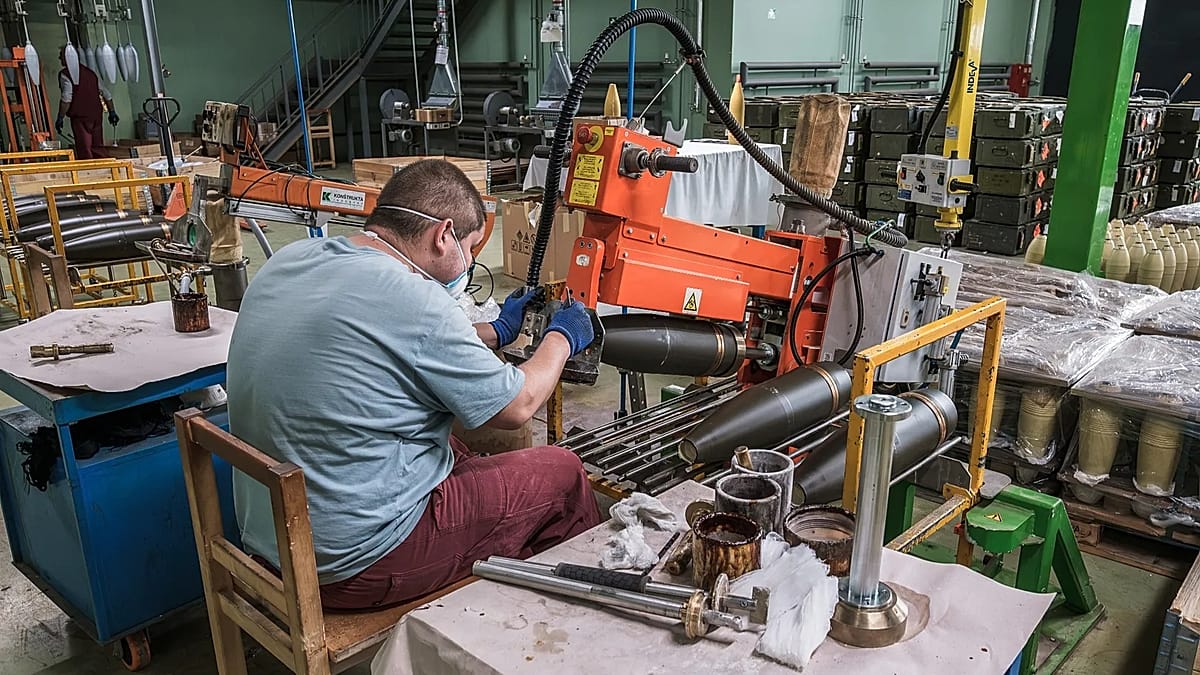
Bulgaria, now a member of NATO and the EU, was part of the communist bloc during the Cold War, and for decades produced ammunition and weapons to Soviet standards, which are also used by the Ukrainian army.
According to government data, nearly 4% of Bulgaria’s GDP comes from the defence industry, which has thrived since Russia started the war in Ukraine in 2022.
Sofia has sent large quantities of weapons to Kyiv and Gyurov hailed the new accord as the “result of long preparation.”
“This is not a mere formality, but a joint commitment to our Euro-Atlantic security,” he said at the press conference alongside Zelenskyy.
The two leaders also said they are working together on the creation of a gas corridor, called the Vertical Gas Corridor, to link Greece with several countries in southeastern Europe.
Gulf deals
The agreement with Bulgaria comes hot on the heels of a raft of similar deals Zelenskyy inked with partners in the Gulf.
Ukraine agreed to provide Gulf states with its complete air defence system — including maritime drones, electronic warfare and interception technology — to fend off Iranian drones, Zelenskyy said on Monday after a tour of Saudi Arabia, the United Arab Emirates, Qatar and Jordan.
“Not just interceptors alone, but also defence lines, software, electronic warfare systems, and so on. In other words, we are taking a systemic approach to this,” Zelenskyy said.
Speaking in a WhatsApp chat with journalists, he also confirmed that Ukraine’s maritime drones are part of the deals made with Saudi Arabia, the UAE and Qatar.
Kyiv’s naval drone fleet has been expanding in recent years, and Ukrainian sea drones have proven effective in inflicting heavy losses on Russia’s military sites and ships in the Black Sea, such as the Magura-V5 drones, which have been used to target the Russian fleet.
Zelenskyy also said that Ukraine is willing to share its expertise in unblocking maritime trade routes with the naval drones.
What is Ukraine getting in return?
For Ukraine the deals with the Gulf states are an opportunity to open its arms exports on a global scale.
Zelenskyy announced back in September that Kyiv was ready to take this is much anticipated step, which would transform the country’s defence industry and allow Kyiv’s partners to access the rarest type of weapons – those tested on the battlefield.
And this is why it is important that the deals have been signed for 10 years, Zelenskyy said.
“It is about exports and about opening up exports. But it the right kind of opening, where we understand that we are not selling our experience for nothing.”
Kyiv’s top priority is Ukraine’s air defence from Russia’s ballistic missiles. Zelenskyy said his country is feeling the shortage of PAC-3 missiles for Patriot air defence systems.
With only around 60 of those produced per month, many are supplied to the Middle East.
“All anti-ballistic packages – we can see how partners are directing as many of them as possible to where things are most intense today, primarily the Middle East.”
He confirmed that the issue had been raised during his visit to the Gulf but refused to provide further details.
“Of course, this issue was raised in Middle Eastern countries. I will not go into details. We will continue working to ensure that Ukraine is supplied in this area.”
Read the full article here