

Authored by Jonathan Turley via jonathanturley.org,
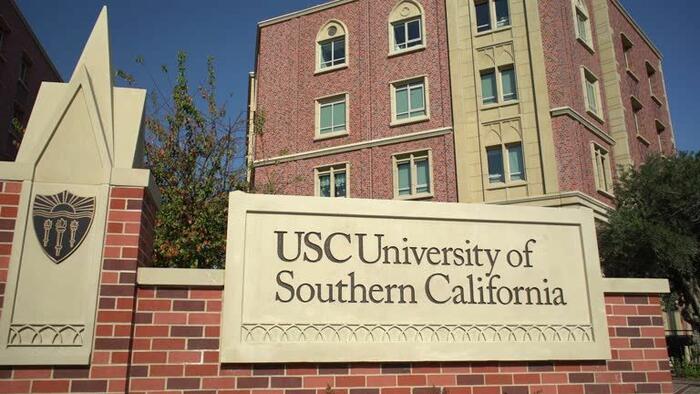
The University of Southern California (USC) is under fire after canceling the California gubernatorial debate with less than 24 hours’ notice. The reason? None of the polling candidates are people of color. It was a crushingly revealing moment in a state where universities have long defied voters who demanded an end to affirmative action in admissions.
USC Dornsife Center for the Political Future and ABC/KABC Los Angeles were scheduled to co-host the debate at Bovard Auditorium on Tuesday evening. Then it was canceled on Monday.
Former Biden Health and Human Services Secretary and California Attorney General Xavier Becerra had sent a letter to President Beong-Soo Kim, alleging “election rigging” and objecting “you disqualified all of the candidates of color from participating.”
For many, USC succeeded in beclowning itself by first defending USC Professor Christian Grose’s “data-driven” selection process and then abruptly canceling the debate lineup selected through that process. If that seems incomprehensible, welcome to American higher education.
The cancellation is only the latest unexpected turn in the election, where the two top vote-getters will face each other in a runoff election.
California Democrats are in a panic as two Republicans currently top the polling: Riverside County Sheriff Chad Bianco and commentator Steve Hilton.
At the same time, the leading Democrats include controversial candidates such as Rep. Katie Porter and Rep. Eric Swalwell. Porter is best known nationally for spewing profanity and abuse at staff members. Last year, Swalwell was outvoted by Rep. Raul Grijalva, who died in March 2025. However, they are still doing markedly better than Becerra with voters.
USC insisted that it “vigorously defends the independence, objectivity, and integrity of USC Professor Christian Grose, whose data-driven candidate viability formula is based on extensive research and enjoys broad academic support.”
That “data-driven system” produced a lineup of Bianco and Hilton as well as Democrats Tom Steyer, San Jose Mayor Matt Mahan, former Rep. Katie Porter, and Rep. Eric Swalwell.
Advocates then went into full rage, calling the process racist and rigged. Becerra declared:
“USC goes to great lengths to justify its exclusionary candidate formula. But you can’t escape the detestable outcome: you disqualified all of the candidates of color from participating while you invited a white candidate who has NEVER polled higher than some of the candidates of color, including me.”
However, the methodology considered both polling percentage and fundraising with the polling given greater weight.
Becerra has been shown at 3 percent, notably within the statistical margin of error for most polls. In other words, he could be closer to zero. (He is shown as tied with Mahan, who Becerra appears to be referencing in his letter as lacking higher polling).
USC then yielded after trying to expand the number of participants to appease objectors. In a statement, USC stated:
“We recognize that concerns about the selection criteria for tomorrow’s gubernatorial debate have created a significant distraction from the issues that matter to voters. Unfortunately, USC and [debate co-sponsor] KABC have not been able to reach an agreement on expanding the number of candidates at tomorrow’s debate. As a result, USC has made the difficult decision to cancel tomorrow’s debate and will look for other opportunities to educate voters on the candidates and issues.”
Becerra took a victory lap: “We fought. We won! … Thank you to everyone who stood up, raised hell and demanded justice. Never give up when you’re fighting for fairness!”
At least Becerra’s position is comprehensible. He has long defended affirmative action in California. Indeed, despite statewide votes against the practice, California universities continue to be accused of applying racial criteria in admissions. Becerra is effectively demanding such action for himself as a “candidate of color.”
USC was left stumbling in search of a place to hide. USC scholars defended the process that USC affectively scuttled:
“All of us expect and welcome critical engagement from inside and outside the academy. What Professor Grose has faced, however, is not substantive or methodological debate. Attacks and insinuations from members of the political classes include completely baseless allegations of election-rigging, inconsistency, bias and data manipulation. These are harmful character assassinations, not substantive debate. They are of a piece with other attempts to strong-arm or malign scholars that have become all too common in America.
Whatever their intent, the effect of these attacks is to diminish academic freedom and chill scholarly willingness to add their voices to the public square. It is imperative that universities defend their faculties’ integrity when it is unfairly attacked.”
That is a powerful statement if one does not then consider that the university caved, cancelled the debate, and meekly said that it will “look for other opportunities to educate voters on the candidates and issues.” The “strong-arming” succeeded.
What is particularly disappointing is that I just spoke at USC and was impressed with the members of the USC community seeking to restore a diversity of viewpoints. The event was sponsored by The Center for the Political Future, which was the sponsor of the debate. It was also organized by the USC Open Dialogue Project and the USC chapter of the Heterodox Academy. Both have written in defense of this process.
Professor Morris Levy with Heterodox wrote: “[USC’s] message is unmistakable: USC was allowing “concerns” and a public “distraction” to override its own institutional conviction that the selection formula was data-driven and backed by research.”
So Heterodox, The Center for the Political Future, and ABC7 issued statements indicating that they were prepared to go forward and also defended the process of selection. That left only USC.
In this controversy, USC succeeded in finding the least defensible ground to make its stand. It denounced the cancel campaign but then effectively yielded to it.
The alternative is to stand by your race-blind, data-driven process and hold the debate for all invited candidates willing to attend.
Where USC was criticized recently for its fake punt in the game with Northwestern, it actually punted in this play and left the field.
Jonathan Turley is a law professor and the best-selling author of “Rage and the Republic: The Unfinished Story of the American Revolution.”
* * * You can support ZeroHedge through a premium subscription or our store. We greatly appreciate it.
Read the full article here