

Published on
Someone clever once said that history is not about recording dates but about connecting the dots.
ADVERTISEMENT

ADVERTISEMENT
For Europe, this signals a cold winter of diplomacy. The newly appointed Ayatollah Mojtaba Khamenei is a shadow operator with deep ties to the elite Revolutionary Guards military corps, and his rise suggests that Tehran has no interest in negotiations. And Europe must now prepare for three shocks.
First, the war will not end quickly. Mojtaba Khamenei is a hardline choice for a hardline moment. Second, oil prices are already surging past $100, threatening a new energy crisis.
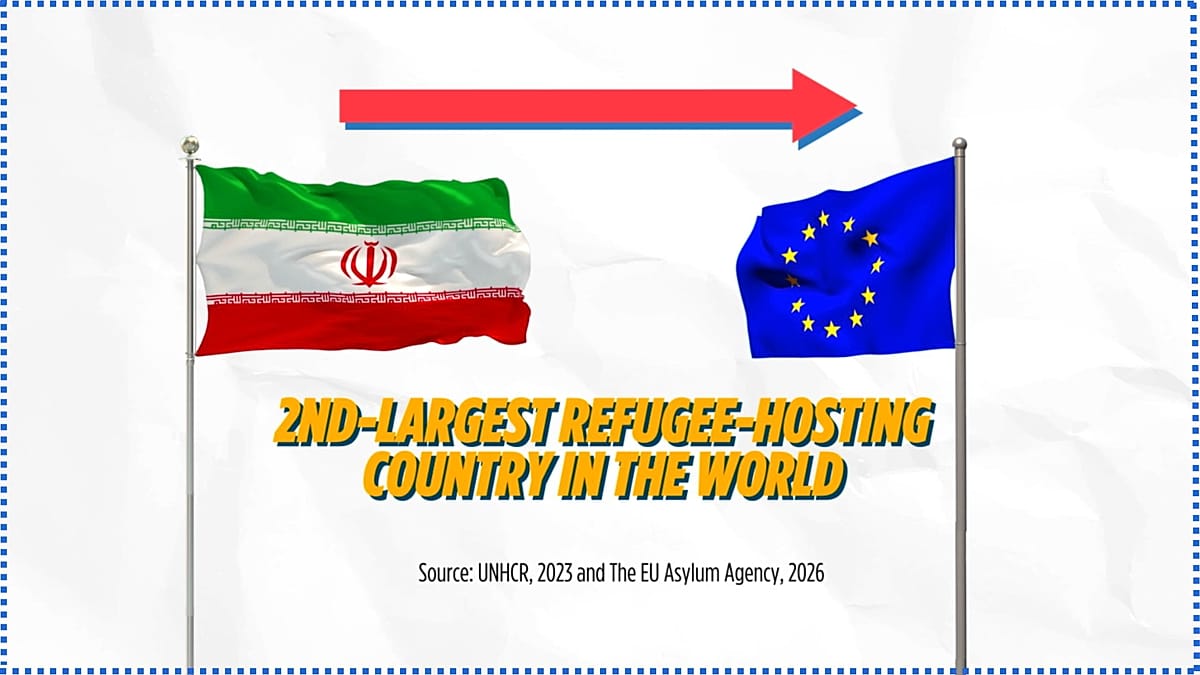
Third is a migration risk. That instability could trigger an “unprecedented” refugee wave toward European borders.
And for the US and Israel, Mojtaba Khamenei is not a statesman, he is a target. Israel’s Defence Minister Israel Katz was blunt: the successor is an “unequivocal target for elimination.”
And for a man who lost his father, mother and wife in recent strikes, compromise with the US and Israel might be simply off the table.
Finally, and most importantly, what does this mean for Iranians?
For the people, this transition could feel like the ultimate betrayal of the 1979 Islamic Revolution. After all, that uprising was meant to end the hereditary monarchy forever.
And Mojtaba Khamenei inherits a nation in economic ruin, relying entirely on the military and hardline security forces to keep control. And after the recent bloody crackdown on protesters, it is clear he is not fighting for the Iranian people, but for the survival of the system.
But one might ask: can a revolution survive by becoming the very thing it once overthrew?
Watch the Euronews video in the player above for the full story.
Read the full article here