

Authored by Matthew Smith via OilPrice.com,
-
Guyana’s offshore oil discoveries have driven explosive GDP growth, propelling it into the global top tier by income per capita.
-
Heavy dependence on petroleum revenues, weak institutions, and geopolitical pressure from Venezuela raise serious risks of an oil curse.
-
Despite massive state spending and infrastructure investment, much of the population remains poor, highlighting deep distributional challenges.
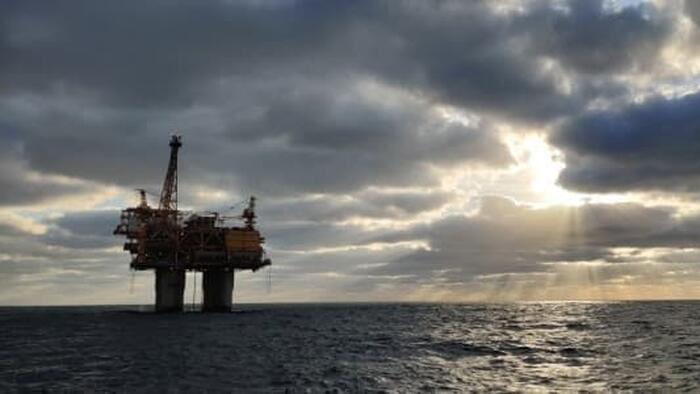
In a remarkable turnaround, the tiny South American country of Guyana, once one of the continent’s poorest nations, now ranks among the world’s top 10 wealthiest countries by gross domestic product (GDP) per capita. In a mere decade, Guyana went from first discovery to be lifting nearly 900,000 barrels of crude oil per day from the prolific 6.6-million-acre Stabroek Block. This, despite the lopsided deal favoring the ExxonMobil-led consortium, which controls the oil acreage, has delivered a massive economic windfall. There are concerns that this breakneck economic growth and the massive income generated by oil will see Guyana struck by the oil curse.
In a recent survey ranking the world’s wealthiest countries using projected 2025 GDP by purchasing power parity per capita, Guyana ranked in 10th place, compared to 107th a decade earlier. This put the former British colony behind wealthy countries like Brunei, Switzerland and Norway but, surprisingly, ahead of the world’s second largest economy, the United States of America. Indeed, Guyana’s GDP by purchasing power parity has skyrocketed since oil production began in December 2019. According to the International Monetary Fund (IMF) it rose sevenfold, from $10.69 billion that year, to an estimated $75.24 billion for 2025.
That immense economic expansion saw Guyana, for a brief period, become the world’s fastest-growing economy. From 2022 to 2024, the tiny country of less than one million reported annual GDP growth rates of 63.3%, 33.8% and 43.6% respectively, by far the highest each of those years for a sovereign state.
While growth has dropped off over recent months, despite petroleum output rising because of the start-up of the Yellowtail project, the former British colony’s economy is forecast to expand by 10.3% in 2025. This makes Guyana the world’s third fastest-growing economy this year.
The latest government data shows Guyana is pumping around 900,000 barrels per day, making the tiny country South America’s third-largest oil producer behind Brazil and Venezuela. Petroleum production will continue to grow with Exxon developing three additional projects in the Stabroek Block. These are the Uaru, Whiptail and Hammerhead developments with a proposed fourth facility, Longtail, subject to regulatory review. On completion of those three facilities, which start up between 2026 and 2029, will add 650,000 barrels daily, lifting Guyana’s total potential production to 1,5 million barrels per day.
There is a fourth facility under development, although it has yet to be approved. This is the 2018 Longtail discovery, which was the Exxon-led consortium’s fourth find in the Stabroek Block. The $12.5 billion Longtail project, unlike earlier developments, will be a natural gas and condensate facility. It is currently undergoing environmental permitting, with Exxon expecting to make a final investment decision (FID) by the end of 2026. Once approved, it is anticipated Longtail will come online during 2030, adding up to 1.5 billion cubic feet of natural gas and 290,000 barrels of condensate daily. This will lift Guyana’s hydrocarbon output to over 1.7 million barrels per day.
Once those offshore petroleum assets are operational, the oil produced will boost the former British colony’s GDP. The IMF predicts that between 2025 and 2030, Guyana’s GDP, based on purchasing power parity, will more than double from $75 million to $156 million. That for a country of less than one million translates to an impressive GDP per capita of just under $193,000. When using this metric, it will make Guyana the world’s second-wealthiest nation, behind Liechtenstein and ahead of Singapore. Such a massive concentration of wealth generated by a single resource, petroleum, is sparking considerable fear that Guyana will be impacted by the oil curse.
This is a phenomenon where a country blessed with copious petroleum resources becomes completely economically and financially dependent on crude oil. This typically leads to poor governance, extreme corruption, malfeasance, democratic backsliding, political instability and eventually internal conflict. A prime example of the oil curse, along with the social, political and economic impact it has on petroleum-dependent nations, is Venezuela. Decades of economic over-dependence on crude oil negatively affected Venezuela’s development, destabilising the country and eventually leading to dictatorship and economic collapse.
Incidentally, the Stabroek Block, which is estimated to contain recoverable oil resources of at least 11 billion barrels, has become a target for Caracas. After Exxon made a swathe of world-class discoveries in the offshore acreage, Venezuela’s president, Nicolas Maduro, ratcheted up his sabre-rattling and aggressive rhetoric as part of his campaign to reclaim the long-disputed Essequibo region. This area, comparable in size to the state of Georgia, comprises two-thirds of Guyana’s territory and is rich in precious metals, diamonds, copper, iron, aluminium, bauxite, and manganese.
You see, the prolific Stabroek Block lies in Guyana’s territorial waters that are part of the disputed Essequibo region, an area claimed by Venezuela since independence. Caracas over the last three years has intensified its campaign to regain control of the Essequibo, even threatening to invade the region. There are regular skirmishes between Guyana’s army and Venezuelan gangs on the border between the two countries in the Essequibo. Venezuelan military vessels have entered the Stabroek Block to harass and intimidate the crews of the Floating Production Storage and Offloading (FPSOs) operating in the offshore oil acreage.
There are very real fears that Guyana, which is a developing country with a history of corruption, lacks the good governance and institutional stability to effectively manage this massive economic windfall generated by this once-in-a-generation oil boom. Already, concerns are emerging about how Georgetown is spending the vast oil profits flowing into government coffers. Georgetown has embarked on a massive infrastructure boom, budgeting $1.2 billion in public works for 2025 to fund new roads, bridges, the development of a world-class deepwater port and public goods such as hospitals. There are, however, considerable concerns that many Guaynese are not benefiting from the tremendous economic windfall generated by oil.
Despite the economy growing at a stunning rate, a sizable portion of the population still lives in poverty. Analysts claim that up to 58% of Guyanese live below the poverty line, although an accurate number is difficult to determine because of a lack of official data. The World Bank estimated in 2019 that 48% of Guyana’s population lives below the poverty line. Despite the economy’s rapid growth, community leaders, nonetheless, claim that much of the wealth generated by the oil boom has yet to trickle down to Guyana’s poorest communities, especially in rural regions.
Those fears are exacerbated by Georgetown’s growing dependence on volatile international energy markets, at a time when the outlook for crude oil is poor. The international Brent benchmark price is down 17% over the last year, which is sharply impacting oil revenues. Analysts from major financial institutions are forecasting that Brent could plunge into the $30 per barrel range by 2027 due to overwhelming market supply. Unsurprisingly, the rapid development of Guyana’s offshore oilfields is a key contributor to this massive jump in non-OPEC global supply growth.
This will sharply impact Georgetown’s newly found oil riches. As international oil prices plunge due to an overwhelming supply glut, Guyana’s petroleum revenue will plummet. This will be exacerbated by 75% of the petroleum produced from the Stabroek Block being classified as cost oil, thus seeing it excluded from royalties and profit-sharing payments with Guyana. While this will not be enough to roil Guyana’s newfound economic boom it has the potential to trigger corruption and malfeasance, leading to uneven development while damaging an increasingly petroleum-dependent economy.
Loading recommendations…
Read the full article here