
Supreme Court to decide if emergency room doctors can perform medically necessary abortions in states that prohibit them

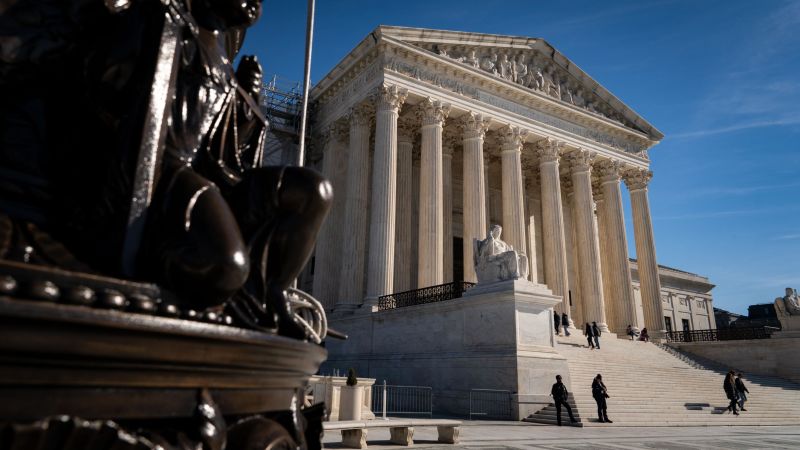
The Supreme Court said Friday that it will decide whether emergency room doctors can perform medically necessary abortions in states that prohibit them, bypassing the court of appeals to resolve on an expedited basis a lawsuit brought by the United States against Idaho.
Idaho’s Defense of Life Act is a near total ban on abortion, but there is an exception to prevent the mother’s death. The law imposes penalties on doctors who perform prohibited abortions unless the “physician determined in good faith medical judgement and based on the facts known to the physician at the time, that the abortion was necessary to prevent the death of the pregnant woman.” Physicians who violate the law could face criminal penalties and risk the suspension of their licenses.
The Biden administration sued, claiming that a provision of a federal Medicare statue – the Emergency Medical Treatment and Labor Act (EMTALA) – preempts Idaho’s law in emergency rooms.
The federal law requires hospitals to provide stabilizing care to emergency room patients regardless of their ability to pay. It was enacted to ensure that the poor and uninsured receive emergency medical care at hospitals receiving Medicare reimbursement.
A district court in Idaho blocked the law in hospital emergency rooms that receive Medicare funding, holding that the state law interferes with a federal Medicare statute.
In 2022, US District Judge B. Lynn Winmill said that the “broad scope” of Idaho’s near-total ban on abortion meant that he was not convinced that it would be possible for emergency health care workers to “simultaneously comply with obligations” under both state and federal law. “The state law must therefore yield to federal law to the extent of that conflict,” he wrote.
A federal appeals court later agreed to put the district court ruling on hold pending appeal, but a larger panel of judges on the 9th US Circuit Court of Appeals lifted the pause on November 13.
The state, represented by a conservative legal group that opposes abortion, then turned to the Supreme Court, asking the justices to step in on an emergency basis to put the district court ruling on hold while appeals play out.
“After Dobbs,” Erin Hawley a lawyer for the Alliance Defending Freedom told the justices in court papers, “the United States adopted the novel view that EMTALA creates a federal right to abortion in emergency rooms, even though EMTALA is silent on abortion and actually requires stabilizing for the unborn children of pregnant women.”
The Justice Department warned the justices that the law’s provision could have “devastating harms” for women in the state and urged the court to keep that part of it on pause.
“As the district court recognized, when state law criminalizes essential care required by federal law, ordinary principles of preemption require state law to give way,” Solicitor General Elizabeth Prelogar said in court papers.
“The narrow preliminary injunction is preserving the status quo and protecting women and doctors in Idaho from the devastating harms that would result if doctors could be subjected to criminal prosecution for providing essential emergency care,” Prelogar wrote.
Read the full article here