

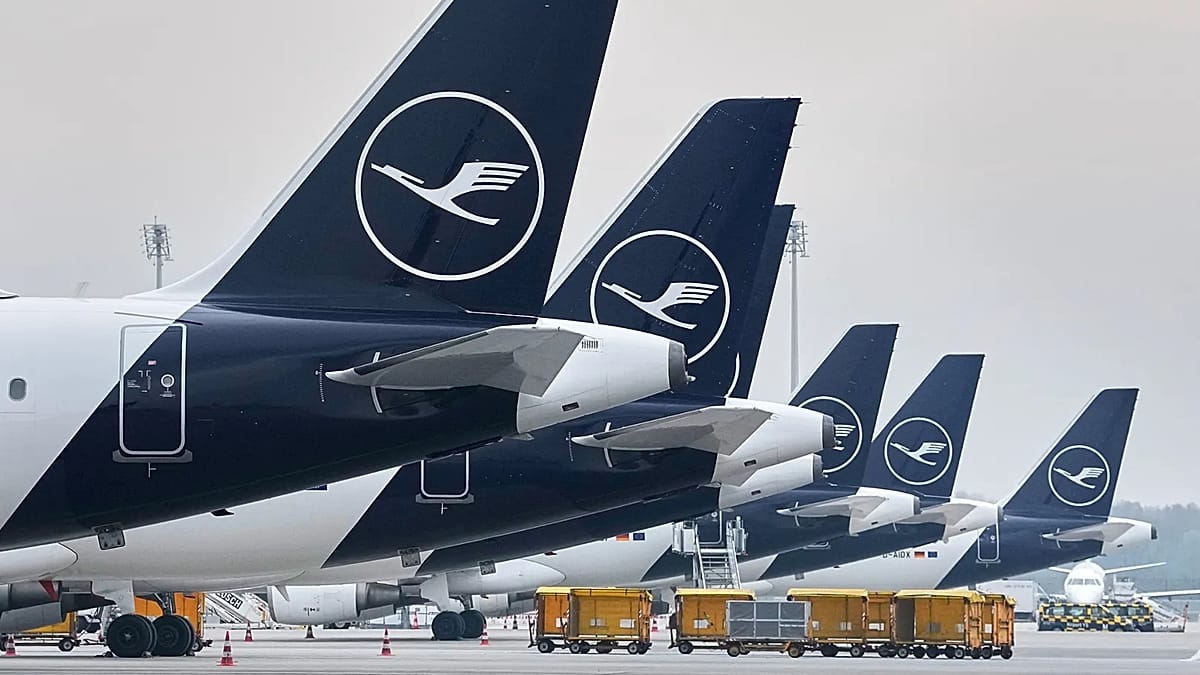
Europe has “maybe six weeks or so of jet fuel left,” the head of the International Energy Agency (IEA) said on Thursday, warning of possible flight cancellations “soon” if oil supplies remain blocked by the Iran war.
ADVERTISEMENT

ADVERTISEMENT
IEA Executive Director Fatih Birol painted a sobering picture of the global repercussions of what he called “the largest energy crisis we have ever faced,” stemming from the cut-off of oil, gas and other vital supplies through the Strait of Hormuz.
“In the past there was a (music) group called Dire Straits. It’s a dire strait now and it is going to have major implications for the global economy. And the longer it goes, the worse it will be for the economic growth and inflation around the world,” he said.
The impact will be “higher (gasoline) prices, higher gas prices, high electricity prices,” Birol said.
Economic pain will be felt unevenly, with some countries “hit worse than the others,” he said, naming Japan, Korea, India, China, Pakistan and Bangladesh as being on the front line of the energy crisis.
“The countries who will suffer the most will not be those whose voice are heard a lot. It will be mainly the developing countries. Poorer countries in Asia, in Africa, and in Latin America,” he said.
“Then it will come to Europe and the Americas,” he added, speaking from his Paris office.
If the Strait of Hormuz is not reopened, he said that for Europe, “I can tell you soon we will hear the news that some of the flights from city A to city B might be cancelled as a result of lack of jet fuel.”
Birol spoke out against the so-called “toll booth” system that Tehran reportedly set up for some ships, allowing them to travel through the strait for a fee. He said that turning it into a more permanent rule would risk setting a precedent that could be applied to other waterways.
“If we change it once, it may be difficult to get it back,” he said. “It will be difficult to have a toll system here, applied here, but not there.”
“I would like to see that the oil flows unconditionally from the point A to point B,” he said.
May or June shortages
Last week, the Airports Council International Europe wrote to the European Commission saying shortages of jet fuel could begin at the beginning of May if tankers do not begin sailing through the Hormuz.
Traffic through the waterway, through which a fifth of the world’s crude oil and liquefied natural gas supplies transited before the war, has been almost completely blocked since the Iran war started with US-Israeli air strikes on 28 February.
Birol warned that Europe could face shortages of jet fuel “maybe beginning of May,” but the situation varies considerably across the continent.
Austria, Bulgaria and Poland have comfortable stocks. For Britain, Iceland and the Netherlands, it is the opposite. France is somewhere in the middle. And the impact won’t be the same for all airports and airlines.
“Smaller, inland located airports will be in a weaker position than the main hubs,” ING bank economist Rico Luman said.
“It won’t be a matter of full halt, but part cancellation at some airlines and airports,” he added.
‘Serious supply issues’
Airlines have little visibility to plan their flight schedules.
Airlines for Europe (A4E), a trade association that includes Air France-KLM, Lufthansa and Ryanair, has been urging the European Union to begin providing real-time information on jet fuel stocks at airports.
The data would have to come from fuel suppliers, who are not enthusiastic about turning over sensitive commercial data to their major clients.
TotalEnergies has warned that if oil supplies from the Gulf remain blocked in June it would not be able to supply all of its customers.
“If this war and this blockade last more than three months, we’ll begin to face some serious supply issues in some products like jet fuel,” the company’s chief executive Patrick Pouyanne said on Monday.
Airlines for Europe (A4E) has also suggested that the European Commission exceptionally authorise the import of US jet fuel, which is produced to a slightly different standard than in the rest of the world.
Regulatory, political and logistical issues mean there is little chance this could happen in the near future.
Read the full article here